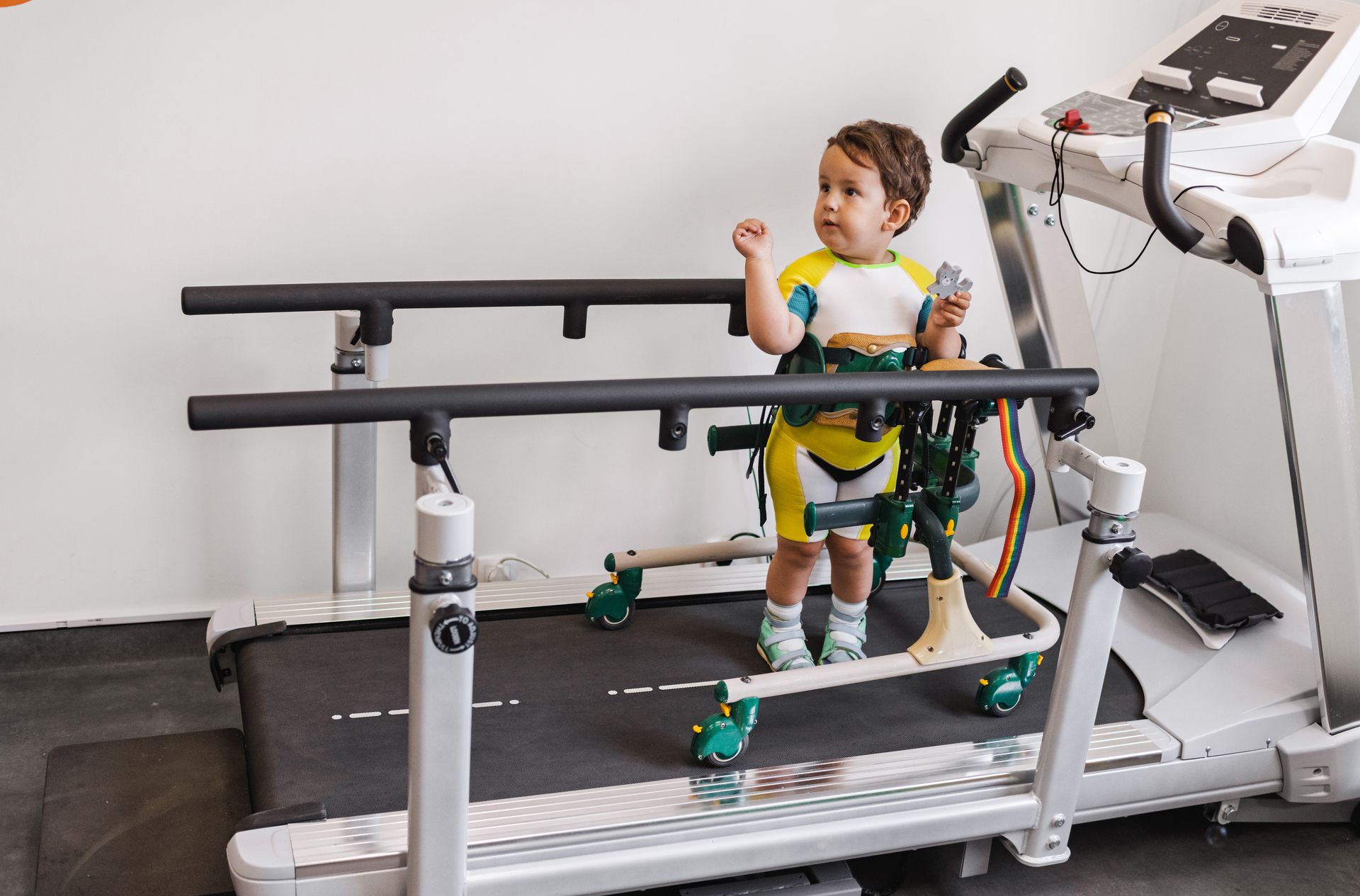
Supported Standing For Head & Trunk Control

Mary B. Pengelley, PT, DPT, ATP • July 18, 2026

Chapter 1: Why Do Some Children Use Standers?

  • Most infants are born with normally functioning musculoskeletal systems. The brain signals muscles to move, and healthy bones and joints function reliably, allowing them to sit, crawl and walk. 
  • A baby born prematurely, with genetic differences, or brain injury may experience atypical neuromuscular signals, which eventually can impact how their bones, muscles and joints develop.
  • When muscles move in unusual patterns (abnormal tone) or don’t move frequently enough, they tend to get tight (develop contractures).1 Since muscles attach to bones, and infants’ bones are soft and not fully formed, the pull - or lack of pull - from muscles can affect how the skeletal system is formed. 
  • Growing up with complex medical conditions often puts children at risk for scoliosis  (curvature of the spine), hip dysplasia (unstable hips that become flattened and painful) and decreased bone density (fragile bones).²,³
  • Often these changes occur so gradually that they can be missed unless caregivers and medical professionals are anticipating and proactively working to prevent them.

Chapter 2: Essential Positioning Principles

Most caregivers understand and recognize when their child doesn’t “look straight,” but they may not be aware that some positions are more important than others to protect their child’s body shape.  For example:


  • Hip-healthy positioning is essential for every infant to safeguard their developing hip sockets. Hip dypslasia is reported in nearly 15% of all newborns.4 In these instances, doctors recommend placing the infant’s legs in an open (abducted) position to better seat the ball of the leg bone (femoral head) deep within the socket of the hip (acetabulum). This helps the joint to become round and stable. A typically growing toddler will naturally start standing and walking in the abducted hip position for more stability. This is important for children who require support to stand. Using adaptive standers that can be positioned in hip abduction helps minimize the risk of hip dysplasia.⁵,⁶,⁷
  • Proper spinal alignment begins with a level and stable pelvis. The pelvis is the foundation (base of support) for the spine and head. If it is not level when a child is sitting or standing, the spinal column will tend to lean toward the lower side of the pelvis, and then compensate back toward the opposite side, in an effort to keep the head more centrally positioned over the body.⁷,⁸ Adaptive standers with independent leg and foot supports allow for precise adjustments to accommodate leg length discrepancies or muscle tightness, ensuring the pelvis remains level and correctly aligned. 
  • Upright and balanced head positioning is also important for daily life, from eating and socializing to simply observing the world. Imagine the head as a 5-7 lb bowling ball (the average weight for a five-year-old) supported on the end of a spring (the neck). If the head tilts, it creates a pull on the neck and spine. The further it moves off-center, the more gravity takes over, making it hard to return to neutral. Conversely, when the spine is properly aligned and the head sits squarely on top, it becomes significantly easier to maintain an upright head and trunk.⁹ Proper trunk supports in a stander can help children maintain this alignment while gradually building active strength in their necks and backs.
  • Upright and more active standing improves bone density
    by facilitating full weight bearing through the legs and feet. For optimal comfort and function, the hips, knees, and ankles should be held in straight alignment to mimic a natural posture. While ankle-foot orthoses provide stability from the ground up, adaptive standers ensure the entire lower body remains properly aligned for children who cannot stand independently.
    Regular use of standers promotes increased bone density, leading to a stronger, healthier skeletal system.¹⁰
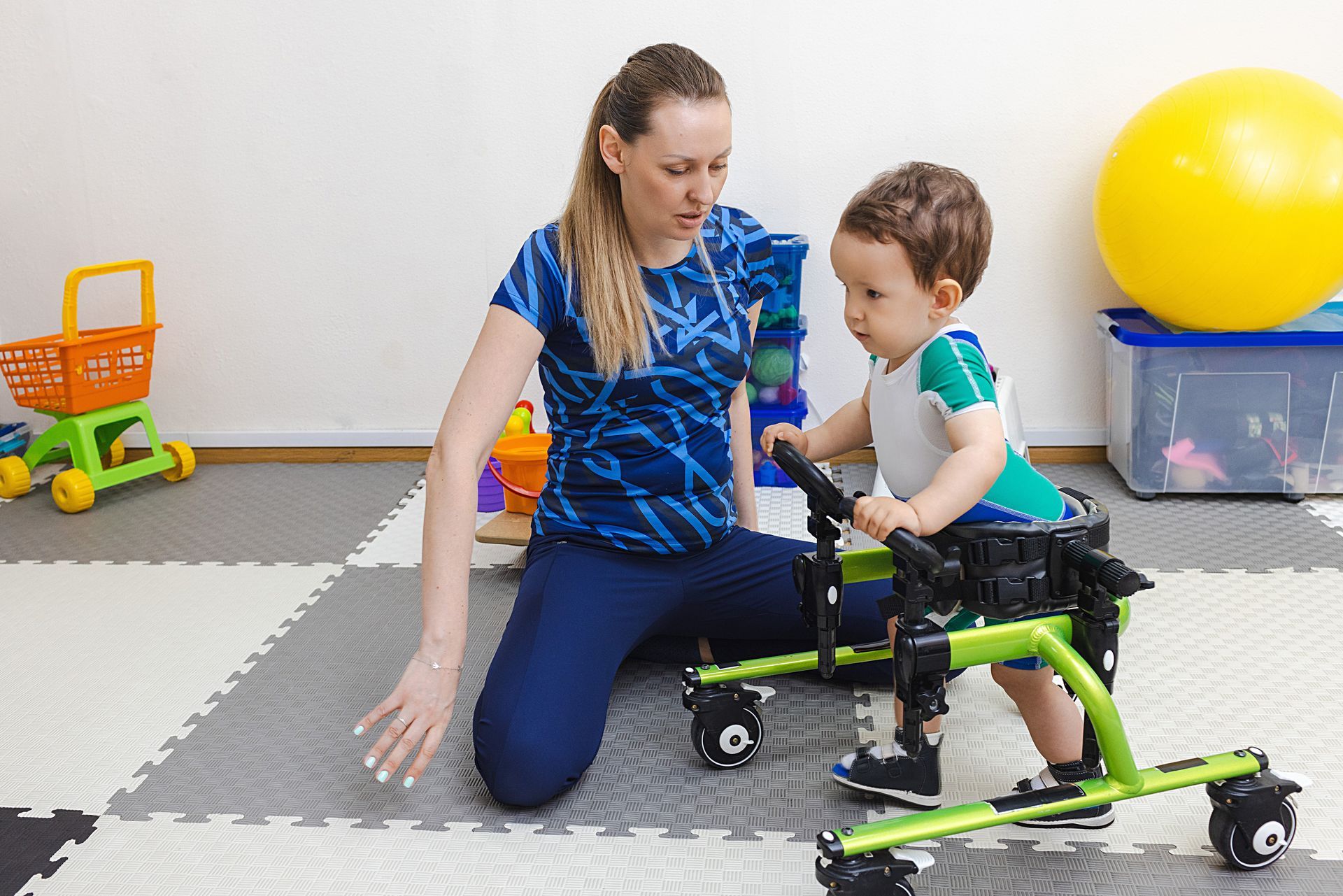
  • Standing allows all muscles to get stronger. As children engage neck and trunk muscles during standing activities, their arms are able to reach better, they may speak or breathe more easily, or they may hold their head up longer to eat or learn. Standers help children become more successful and capable of using their arms, legs and back muscles without fear of falling. Every movement builds muscle strength and confidence to move more.


Chapter 3: Evaluation and Fitting

Successful, consistent use of adaptive standers relies on a partnership between caregivers, therapists, teachers, and children. Involving caregivers in the initial fitting empowers them to make future adjustments as the child grows, or as their range of motion or alignment evolves. Caregivers can:


  • Assist the clinician during their child’s mat evaluation by helping their child remain relaxed and feel secure. Take photos of the child’s position lying down, and note where you place your hands for best alignment. This can help guide the placement of the trunk and hip laterals on the stander. Take photos from the side view and obtain joint angle measurements to ensure comfortable positioning of the child’s legs. 
  • Measure each body segment (heel to knee, knee to hip, pelvis to underarm, shoulder to top of head) to preset the stander dimensions before transfer.
  • Make adjustments starting from the base of support and moving upwards: Pelvis first, then the lower extremities and feet, followed by the chest, shoulders, and head. This step-by-step approach can improve overall alignment and improve proper activation of muscles.
  • Refer back to the photos taken during the mat evaluation to confirm that the child has achieved their optimal position after setup.


Chapter 4: Building Active Head & Trunk Control

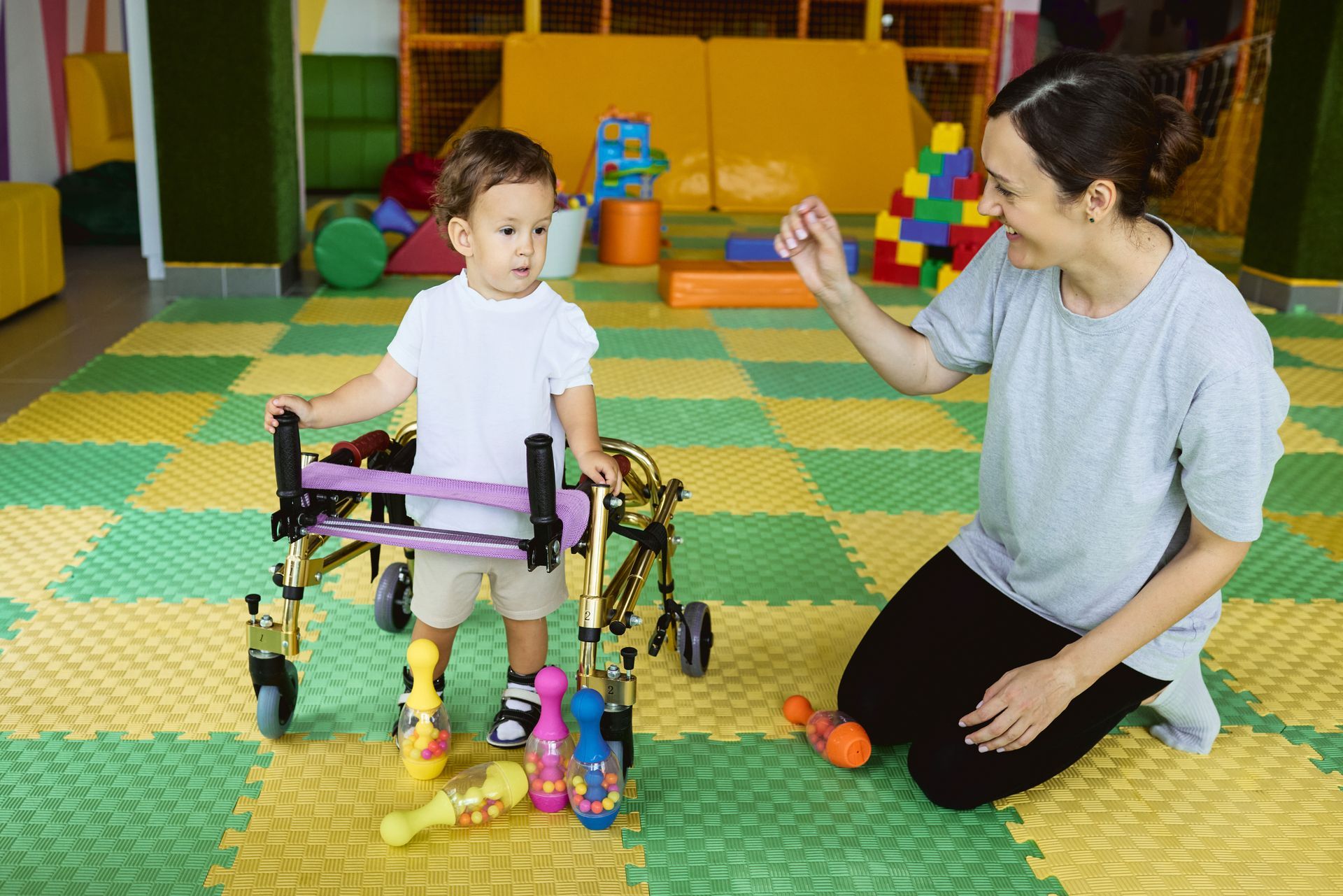
Caregivers can gradually encourage more active trunk and head control through fun activities that require looking and reaching above shoulder level or to the sides. Examples include:


  • Playing with a balloon or beach ball suspended on a string at eye level
  • Reaching for bubbles in different planes
  • Imaginative play with doll houses, car ramps, farm sets
  • Use of an easel on the tray for coloring/painting


Beyond physical benefits, regular use of a stander often yields improvements in social skills, oral motor control, communication, vision, and hand-eye coordination and even digestive function such as bowel movements.¹¹


Consistency is KEY to developing head and trunk control!


  • Start with daily short, engaging standing sessions paired with a snack or meals, or interactive play. Gradually build up the time or use multiple times per day, until your child stands for at least 45 minutes per day (mimimal recommended dosage¹⁰). 
  • The stander can be tilted or remain more upright to increase or reduce challenge. Adjustments should not compromise alignment and stability, and may be done for short periods as tolerated. If the child shows signs of fatigue, they should be repositioned with more support. 
  • As active control improves, lateral supports at the trunk can be lowered, and chest straps loosened or head rest removed to allow for greater upper body control and movement.


A stander gives children the extra time they need to actively improve head and trunk control safely.  This helps them develop better balance, increased endurance, and more confidence during everyday movement activities such as tummy time, sitting or standing.


References


  1. Cloodt E, et al. Knee and foot contracture occur earliest in children with cerebral palsy: a longitudinal analysis of 2,693 children. Acta Orthop. 2020;92(2):222-227. doi:10.1080/17453674.2020.1848154
  2. Hägglund G, et al. Incidence of scoliosis in cerebral palsy. Acta Orthop. 2018;89(4):443-447. doi:10.1080/17453674.2018.1450091
  3. Krarup LH, et al. Hip displacements and correctable scoliosis were prevalent in children with cerebral palsy registered in a Danish follow-up programme from 2010 to 2020. Acta Paediatr. 2024;113(2):336-343.
  4. International Hip Dysplasia Institute. International Hip Dysplasia Institute website. Accessed April 7, 2026. https://hipdysplasia.org/
  5. Presedo A, Rutz E, Howard JJ, Shrader MW, Miller F. The etiology of neuromuscular hip dysplasia and implications for management: a narrative review. Children (Basel). 2024;11(7):844. doi:10.3390/children11070844
  6. Paleg G, Livingstone R. Evidence-informed clinical perspectives on postural management for hip health in children and adults with non-ambulant cerebral palsy. J Pediatr Rehabil Med. 2022;15(1):39-48. doi:10.3233/PRM-220002
  7. Hägglund G. Association between pelvic obliquity and scoliosis, hip displacement and asymmetric hip abduction in children with cerebral palsy: a cross-sectional registry study. BMC Musculoskelet Disord. 2020;21(1):464.
  8. Casey J, et al. Incidence and sequence of scoliosis and windswept hip deformity: which comes first in 4148 children with cerebral palsy? A longitudinal cohort study. BMC Musculoskelet Disord. 2024;25(1):222.
  9. Saavedra S, et al. Segmental contributions to trunk control in children with moderate-to-severe cerebral palsy. Arch Phys Med Rehabil. 2015;96(6):1088-1097. doi:10.1016/j.apmr.2015.01.016
  10. Paleg GS, Smith BA, Glickman LB. Systematic review and evidence-based clinical recommendations for dosing of pediatric supported standing programs. Pediatr Phys Ther. 2013;25(3):232-247. doi:10.1097/PEP.0b013e318299d5e7
  11. Paleg GS, Williams SA, Livingstone RW. Supported standing and supported stepping devices for children with non-ambulant cerebral palsy: an interdependence and F-words focus. Int J Environ Res Public Health. 2024;21(6):669. doi:10.3390/ijerph21060669


By Aimee Brueck July 10, 2026
For many families, mealtime can feel more stressful than enjoyable. Parents often worry when their child suddenly refuses foods they used to love or insists on eating only a small handful of familiar items. At Progressive Pediatric Therapy, we understand how confusing and frustrating picky eating can feel. Our Feeding & Mealtime Wellness Visit helps families turn mealtime struggles into calm, confident routines where children can explore food without pressure and parents can feel supported.
By Aimee Brueck July 3, 2026
In today’s tech-filled world, many parents notice the same pattern at home: when there’s a quiet moment, children often reach for a screen. While technology can be helpful in moderation, play remains one of the most important ways children grow, connect, and learn about the world. At Progressive Pediatric Therapy, our Play Development Wellness Visit helps families understand how play develops and provides simple, practical strategies to encourage creativity, independence, and connection—without the daily battles over screen time.
By Aimee Brueck June 26, 2026
For many families, learning to ride a bike is one of childhood’s biggest milestones.It represents freedom, confidence, independence, and fun.But for some children, bike riding can also feel frustrating, scary, or overwhelming. Parents often wonder:
By Aimee Brueck June 24, 2026
In today’s digital world, children are spending more time typing, tapping, and swiping, and less time writing by hand. Many parents notice the effects quickly.
By Aimee Brueck June 19, 2026
When parents think about kindergarten or preschool readiness, most think about academics first:
By Aimee Brueck June 17, 2026
Summer is a time for fun, family vacations, pool days, and a much-needed break from the school routine. But for many children, summer can also bring something educators call the “summer slide” the loss of important academic skills during the months away from school. For children who struggle with reading, language, or literacy confidence, those gaps can grow even wider over the summer months. That’s why Progressive Pediatric Therapy created our Summer Private Reading Intensive — a personalized, one-to-one literacy experience designed to help children strengthen foundational reading skills while building confidence and momentum before the new school year begins. Using the trusted Lively Letters® approach, our summer program combines evidence-based literacy instruction with engaging, multisensory learning strategies that help children stay motivated and successful.
By Aimee Brueck June 12, 2026
Important changes are coming to Florida’s Medicaid Children’s Medical Services (CMS) Health Plan beginning October 1, 2026.
By Aimee Brueck June 5, 2026
Continuing education is essential for pediatric physical therapists who want to stay current with evidence-based treatment strategies, maintain licensure, and improve outcomes for children and families.
By Aimee Brueck April 16, 2026
Continuing education is essential for speech-language pathologists (SLPs) to stay current with evidence-based practices, maintain ASHA certification, and provide the best outcomes for their clients.
By Aimee Brueck March 27, 2026
Continuing education is essential for pediatric occupational therapists who want to stay current with evidence-based practices, maintain licensure, and deliver the best outcomes for children and families.