A plain-language look at a 2026 systematic review and meta-analysis for parents and pediatric therapists, examining what regular physical exercise does for movement skills in children with autism, and what the evidence still cannot tell us.
Movement is easy to overlook when a child has autism. Families and clinical teams understandably focus first on communication, sensory needs, and social connection. Yet difficulty with balance, coordination, running, catching, and other everyday motor skills is one of the most common features of autism, and it often goes unaddressed. A
new meta-analysis published in the
Journal of Autism and Developmental Disorders asks a practical question that matters to both parents and therapists: does structured physical exercise actually improve motor skills in autistic children, and if so, by how much?
Why motor skills deserve more attention in autism
Autism is now identified in a large share of children. According to the
Centers for Disease Control and Prevention's Autism and Developmental Disabilities Monitoring Network, about 1 in 31 eight-year-olds in the United States has been identified with autism spectrum disorder, and the condition is over three times as common in boys as in girls.
Motor challenges are woven through that picture more often than many families expect. Research drawn from large autism cohorts, including the
SPARK study reported by researchers at the University of Delaware, suggests that a substantial majority of autistic children, on the order of eight in ten, show some form of motor coordination difficulty, affecting things like throwing and catching, handwriting, getting dressed, and planning complex movements. That same reporting found that only about a third of these children were receiving physical therapy, which means motor needs are frequently identified late or missed entirely.
That gap is the backdrop for this study. If motor difficulty is this common and this under-treated, families and clinicians need to know whether a straightforward, low-cost approach like structured exercise can move the needle. This is where a child's
multidisciplinary autism therapy program and hands-on movement work intersect with the research.
What this means for you as a parent
Trouble with movement is very common in autism. About 8 out of 10 autistic kids have a hard time with things like running, catching a ball, writing, or getting dressed. But only about 3 out of 10 get physical therapy.
So if your child trips a lot, or seems clumsy, or skips the playground, you are not imagining it. It is common. It is also easy to miss, because families and doctors often look at talking and social skills first. Movement is worth asking about too.
What the study examined
The study, led by Zhuoling Lei and colleagues, is a systematic review and meta-analysis of randomized controlled trials. In plain terms, the authors did not run a single new experiment. Instead, they gathered the strongest existing trials on the topic, pooled the results using statistics, and looked at the overall pattern. A randomized controlled trial is the type of study where children are randomly assigned to receive an intervention or not, which helps rule out coincidence and bias.
The team searched six research databases through October 2025 and applied strict inclusion rules: children aged 12 or younger with autism, a physical exercise intervention, and motor skills measured with standardized, validated assessment tools. Ten trials met the bar, together including 256 children with a mean age of about 6.9 years.
For therapists and clinicians: the review followed PRISMA reporting standards and was pre-registered on PROSPERO. Risk of bias was assessed with the Cochrane ROB 2.0 tool and the certainty of evidence with GRADE. Outcomes were measured with instruments many pediatric teams already use, including the BOT-2, TGMD-2, PDMS-2, and MABC, and effects were pooled as standardized mean differences using random-effects models where heterogeneity was high. That methodological transparency is part of why the finding is worth taking seriously, even with the caveats discussed below.
What this means for you as a parent
The scientists did not run one new test. They found 10 careful studies that were already done. Then they put all the results together to see the big picture. That is stronger proof than any one study alone.
All the kids in these studies were 12 or younger. There were 256 kids in all, and their average age was about 7. So this research is about kids in the same age range as many of our patients.
The short names above, like PRISMA and BOT 2, are just the names of the rule books and the tests the scientists used. You do not need to know them. They matter because they show the work was done carefully and checked by others.
What the researchers found
According to PubMed, the pooled results showed that structured physical exercise significantly improved motor skills across every domain the authors measured. Reported as standardized mean differences, a common way of expressing how large an effect is, the improvements were:
- Total motor skills: 1.58 (95% confidence interval 1.15 to 2.00)
- Locomotion, such as running and jumping: 1.34 (0.98 to 1.70)
- Object control, such as throwing, catching, and kicking: 1.37 (1.02 to 1.72)
- Balance: 1.73 (0.82 to 2.65)
To translate that for families: in this kind of statistic, a value around 0.8 is already considered a large effect. Every one of these numbers sits well above that threshold, which means the exercise programs were associated with sizable, not subtle, gains in how these children moved. Source: Lei et al., 2026, PubMed,
DOI.
One of the more useful findings for program design came from the authors' meta-regression, an analysis that looks at which features of a program tracked with better results. More frequent sessions were linked to greater improvements in balance, while longer overall program duration was actually linked to smaller balance gains. The authors interpret this as diminishing returns over time, a plateau effect where the body adapts. Notably, the child's age and the length of each individual session did not change the results, which suggests the approach can stay flexible.
What this means for you as a parent
Kids who exercised on a regular schedule got better at moving. They improved in all four areas the scientists checked: movement overall, running and jumping, throwing and catching, and balance.
The numbers above, like 1.58, are a way to measure how big a change is. In this kind of math, anything over 0.8 counts as a big change. Every number here was over 0.8. So these were not small improvements. They were large ones.
Two things stood out. Exercising more often helped balance the most. But stretching a program out over many months did not keep adding more. How long each session lasted did not change the results, and neither did how old the child was. That gives you room to fit movement into your week in a way that actually works for your family.
What "structured exercise" actually means here
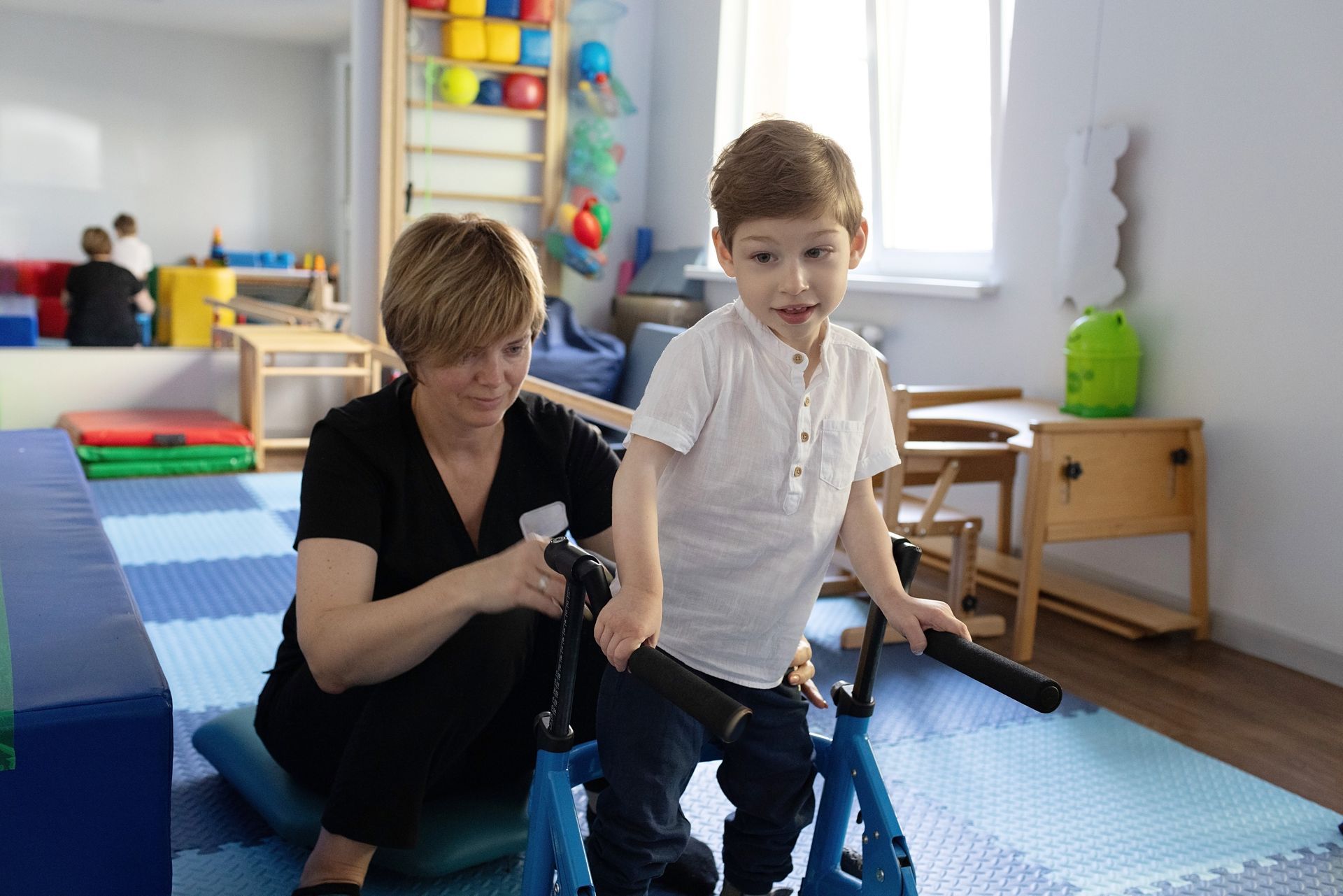
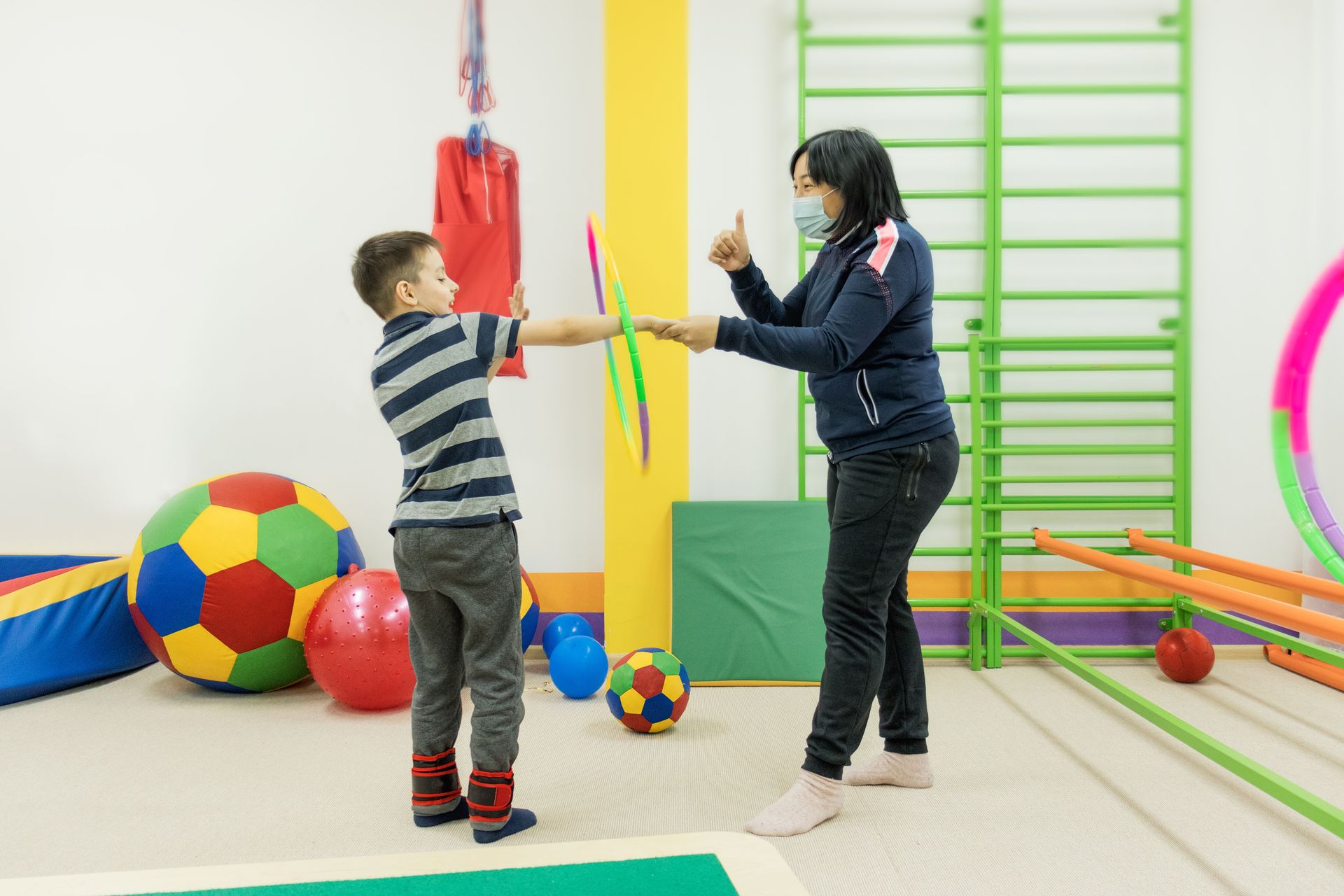
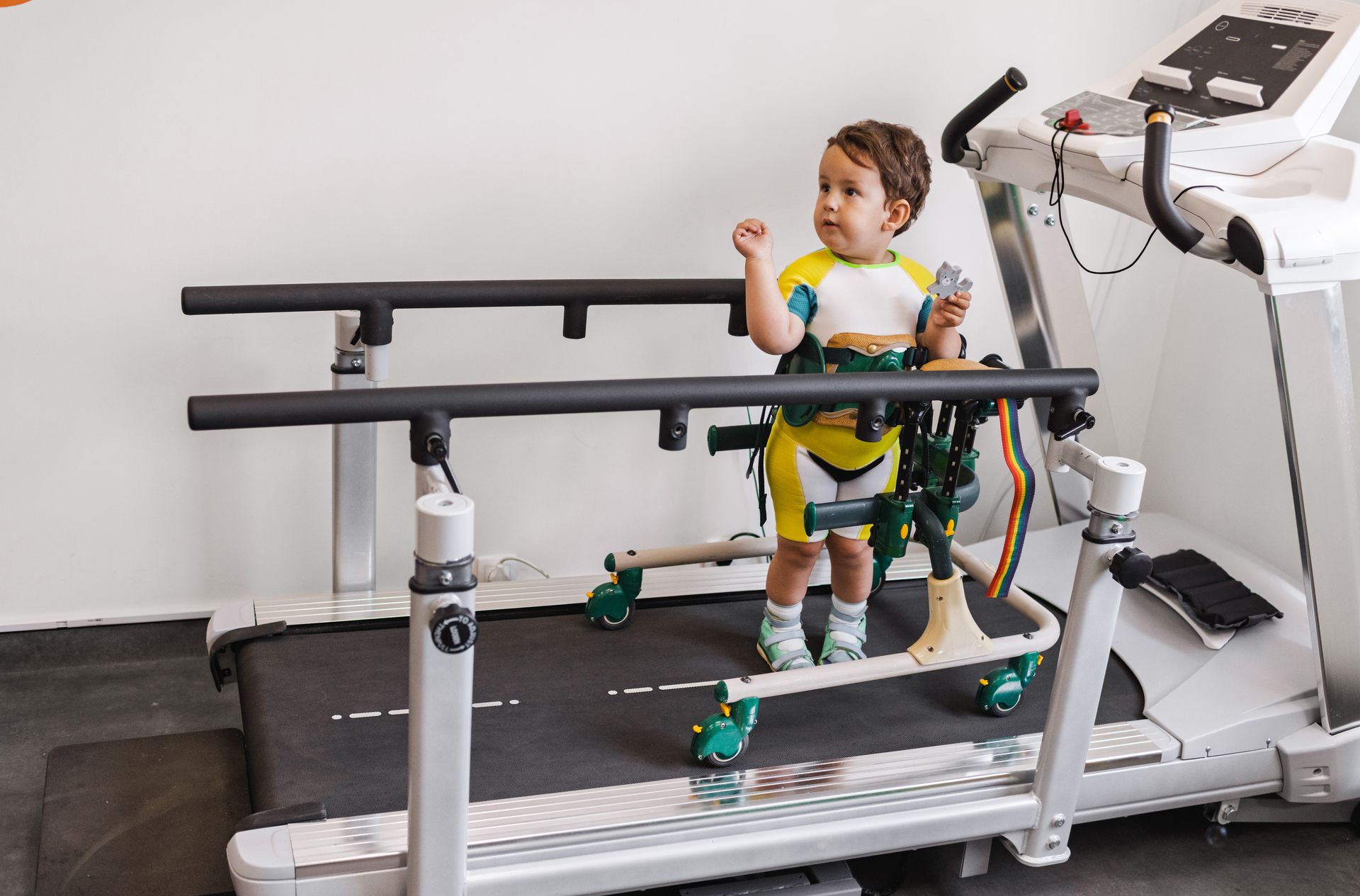
The phrase can sound clinical, but the interventions in these trials are recognizable forms of active play and movement practice: exercises and games that ask a child to run, jump, balance, throw, catch, and coordinate their body. What made them "structured" is that they were planned, repeated regularly, and targeted at specific motor skills rather than left to chance. The takeaway is less about any single branded method and more about consistent, purposeful movement.
The likely reason it helps is that motor skills, like most skills, respond to practice. Repeated, well-designed movement gives the brain and body more opportunities to build the coordination, timing, and postural control that many autistic children find harder to develop on their own.
What this means for parents
The encouraging message is that movement is a lever you can actually pull. Regular, structured physical activity was associated with meaningful improvements in the very skills, balance, running, and ball handling, that help a child keep up on the playground and take part in daily life.
Two practical points stand out from the data. First, frequency appears to matter more than marathon sessions, so shorter bouts of activity done more often may be more useful than occasional long ones, at least for balance. Second, because session length and age did not change the outcome, there is room to fit movement into whatever works for your family and your child's tolerance.
None of this replaces a professional plan. If your child struggles with coordination, frequent falls, or age-expected physical milestones, an evaluation by a pediatric therapist is the right next step. A therapist can tell you whether what you are seeing reflects
delayed gross motor development or a broader pattern, and can design activity that is safe and appropriately challenging. Concerns specifically about
balance and walking are worth raising directly, since balance showed the largest gains in this analysis.
What this means for therapists and clinicians
For pediatric PTs and OTs, this review adds recent, methodologically careful support for something many teams already do: building structured motor practice into care for autistic children. The domain-by-domain effect sizes give a defensible basis for prioritizing locomotor and object-control skill work, and the frequency finding is a concrete programming cue that favors distributed practice over longer, less frequent blocks.
It fits naturally alongside existing work in
physical therapy and
occupational therapy, and it complements sensory-based approaches rather than competing with them, since movement and
sensory integration frequently overlap in this population. As always, outcome tracking with standardized tools, the same instruments used in the review, lets a clinic verify that gains are real for a specific child rather than assumed from the group average.
What this means for you as a parent
That last part was written for therapists, so it uses a lot of their work words. Here is the short version.
This study supports something good therapists already do, which is building movement practice into care for autistic kids. It fits right alongside other kinds of therapy, like sensory work, instead of competing with them.
It also points to something you can ask about. A therapist should measure your child's skills the same way before and after. That is how you find out if your own child is really improving, instead of guessing from a group average.
The limits of the evidence
This is promising evidence, not the last word, and the authors are candid about why.
The pooled sample was small. Ten trials and 256 children is a modest base for conclusions this strong, and small studies can overstate effects. The authors also detected publication bias for total motor skills and balance, meaning positive trials may be over-represented in the literature while trials that found little effect went unpublished. That tends to inflate the apparent benefit.
The balance finding, while the largest, was also the least precise. Its confidence interval ran from 0.82 all the way to 2.65, a wide range that signals real uncertainty about the true size of the effect. The included trials also varied in the exercises used and the tests applied, and heterogeneity was high enough that the authors used statistical models built to handle it.
Two further boundaries matter for how families should read this. The trials looked at short-term outcomes, so we do not yet know how long these motor gains last once a program ends. And all participants were 12 or younger, so the findings should not be assumed to apply unchanged to teenagers. Structured exercise here is best understood as a well-supported complement to established therapy, not a replacement for individualized care.
What this means for you as a parent
This is good news, but it is not a promise for every child. Here is why, in plain terms.
Only 256 kids were studied. That is a small group, and small groups can make results look bigger than they really are. On top of that, studies that find good news get published more often than studies that find nothing. So the real effect may be somewhat smaller than these numbers show.
The scientists also checked the kids right after the programs ended. Nobody knows yet how long the gains last. And no teenagers were included, so we cannot assume the same thing is true for older kids.
The takeaway is simple. Regular exercise is a helpful addition, and a well supported one. It is not a replacement for your child's therapy plan.
Signs your child's motor skills may warrant a closer look
For both parents and practitioners, these are practical prompts to seek or escalate an evaluation:
- Reaching physical milestones, such as walking or jumping, noticeably later than peers
- Frequent tripping, falling, or bumping into things
- Difficulty with balance activities like standing on one foot or riding a bike
- Trouble with ball skills, catching, throwing, or kicking
- Struggles with everyday motor tasks such as dressing, using utensils, or handwriting
- Avoiding playground equipment, sports, or active play that peers enjoy
A single item on its own is rarely cause for alarm, but a cluster of these is a reasonable reason to ask a pediatric therapist for a motor assessment.
Frequently asked questions
Does exercise improve motor skills in children with autism?
In this 2026 meta-analysis of ten randomized controlled trials, structured physical exercise was associated with large improvements in total motor skills, locomotion, object control, and balance in autistic children aged 12 and under. The evidence is encouraging, though based on a relatively small pooled sample.
How often should an autistic child exercise for motor benefits?
The study's analysis found that more frequent sessions tracked with better balance outcomes, while longer overall program duration showed diminishing returns. That points toward regular, repeated activity rather than occasional long sessions. A pediatric therapist can help set a realistic, individualized schedule.
What kinds of exercise were studied?
The trials used planned, repeated movement activities targeting specific skills, the kind of running, jumping, balancing, throwing, and catching practice that shows up in active play and structured motor programs, rather than one single branded method.
Is exercise a replacement for therapy?
No. Structured exercise is best viewed as a complement to established physical, occupational, and speech therapy, not a substitute. It is an emerging, well-supported tool within a broader, individualized plan.
How are motor skills in autism actually measured?
Clinicians use standardized assessments such as the BOT-2, TGMD-2, PDMS-2, and MABC. These same tools were used across the trials in this review, which is part of what makes the results comparable.
Where families can turn
Progressive Pediatric Therapy is a multidisciplinary pediatric clinic in South Florida whose physical, occupational, speech, and feeding therapists regularly build structured movement into care for autistic children. If you are wondering whether your child's motor development would benefit from a closer look, a pediatric evaluation is a good place to start.
Sources and attribution
- Anchor study (via PubMed): Lei Z, Jia L, Tan Q, Xie T, Teo EW, Duyan M, Ilkim M, Özoğlu F, Chang J. "Effects of Physical Exercise on Motor Skills in Children With Autism Spectrum Disorder: A Systematic Review and Meta-analysis of Randomized Controlled Trials."
Journal of Autism and Developmental Disorders. 2026. PMID: 42340634.
DOI: 10.1007/s10803-026-07403-3. Effect sizes and study details retrieved from PubMed.
- Autism prevalence:
Centers for Disease Control and Prevention, Data and Statistics on Autism Spectrum Disorder (ADDM Network) — "About 1 in 31 (3.2%) children aged 8 years has been identified with ASD," and ASD is "over 3 times more common among boys than among girls." Underlying report:
MMWR, ADDM Network, 2022 surveillance year.
- Prevalence of motor difficulty in autism:
SPARK for Autism, "Motor Challenges are Common in Autism, SPARK Study Confirms" — roughly 8 in 10 children showed likely motor challenges, while only about 30% were receiving physical therapy.
This article is for educational purposes and does not constitute medical advice. If you have concerns about your child's development, consult a licensed pediatric therapist or physician.