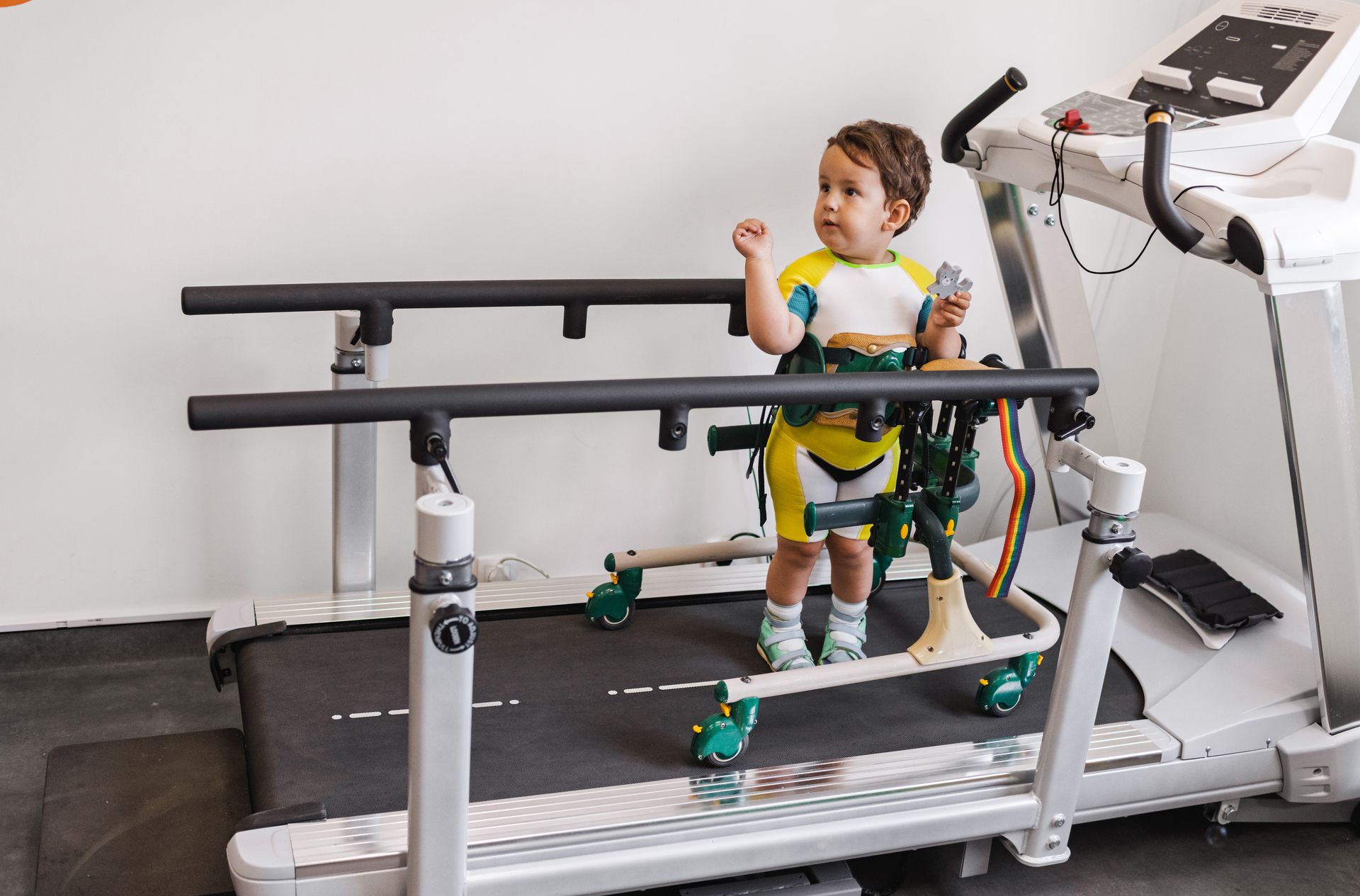
If your child trips more than other kids, holds the railing on every stair, or plants their feet wide apart just to stand still, you have probably been told that balance work will help. It is one of the most common recommendations in pediatric physical therapy.
But how strong is the evidence, really? Balance training has been studied for decades in adults and in typically developing athletes. Children with developmental disorders have received far less attention, even though they are the group most likely to be handed a balance program.
A systematic review and meta-analysis published in 2026 in the journal PeerJ pooled the randomized controlled trials to find out. The short version: balance training works, the gains are meaningful, and nobody has yet figured out the right recipe.
What the Researchers Looked At
The research team searched seven databases, including PubMed, Web of Science, CINAHL, MEDLINE, SPORTDiscus, Scopus, and CNKI, for studies published through January 2026. That breadth matters. Searching Chinese-language literature alongside English-language databases catches trials that most reviews miss.
They restricted inclusion to randomized controlled trials, which is the strictest common study design. A trial had to test a balance training intervention and measure at least one motor outcome, such as balance or strength, in children with developmental disorders. Twenty-two trials met the bar.
The review used ROB-2, a standard risk-of-bias tool, to assess the quality of each trial rather than simply counting up the positive results. The populations studied included conditions such as cerebral palsy and Down syndrome, which the authors flagged as key terms for the work.
What the Trials Found
This is paragraph text. Click it or hit the Manage Text button to change the font, color, size, format, and more. To set up site-wide paragraph and title styles, go to Site Theme.
What This Means for You as a Parent
Balance training helped in every area they checked. The biggest gains were in "functional balance." That means balance during real life, like turning around or reaching for a toy. That is exactly the kind of balance that helps a child keep up on the playground. Kids also got better at holding still, moving without wobbling, and using their whole body. These are group averages. Your child is not an average. But the direction is clear. This kind of work helps.
Strength and Coordination: Promising, But Thin
The review also looked for effects on muscle strength and coordination. Here the honest answer is that too few trials measured them. The studies that did report positive effects, but the evidence base was too small for the researchers to draw firm conclusions.
This is a common pattern in rehabilitation research. Outcomes that are easy to measure in a clinic get measured often. Outcomes that require more time or equipment get skipped, even when they matter.
What This Means for You as a Parent
Balance training might also build strength and coordination. A few studies said yes. But there were not enough studies to be sure. That does not mean it does not work. It just means nobody has checked carefully enough yet. Keep that in mind if you read a website that promises big strength gains from balance work.
The Real Gap: Nobody Knows the Right Dose Yet
This is the most important limitation in the review, and the authors are direct about it.
The 22 trials used different protocols, different exercises, different session lengths, and different program durations. That variety, which researchers call methodological heterogeneity, makes it possible to say that balance training works while making it very hard to say which balance training works best, or how much of it a child needs.
The authors call for future studies that examine dose-response relationships, meaning the link between how much training a child receives and how much benefit they get. Right now, that guidance does not exist in the published evidence.
That gap does not make the finding weak. It makes clinical judgment essential. A therapist choosing exercises for your child is not following a published formula, because there isn't one. They are drawing on training, assessment, and observation of how your specific child responds.
What This Means for You as a Parent
Every study used a different plan. Some did short sessions. Some did long ones. Some used different exercises. So scientists know balance training works. They do not yet know the perfect amount or the perfect exercises. This is why a good therapist watches your child closely and changes the plan. If someone hands you one worksheet and says this works for everyone, be careful. There is no single right plan yet.
Why Balance Is About More Than Falling Down
It is easy to think of balance as a narrow skill, but the gross motor function result points to something wider. When a child can control their body in space, other skills become available to them. Climbing, running with peers, carrying a lunch tray, standing in line, and sitting upright at a desk all draw on postural control.
Children who feel unstable often solve the problem by opting out. They pick the sedentary game. They stay on the bench. Over time that becomes a participation issue as much as a motor one, which is why balance work sits near the center of pediatric physical therapy rather than off to the side.
What This Means for You as a Parent
Balance is not just about falling. When kids feel wobbly, they often stop trying. They sit out at recess. They pick the quiet game. Then they get less practice, and it gets even harder. Helping a child feel steady can help them join in. Joining in is how kids build the rest of their skills.
How Progressive Pediatric Therapy Approaches Balance and Walking Difficulties
At
Progressive Pediatric Therapy, balance work starts with a physical therapy evaluation rather than a template program. Static balance, dynamic balance, and functional balance are different skills, as this review makes clear, and a child can be solid in one and struggling in another. Knowing which one is the problem shapes everything that follows.
From there, our licensed pediatric physical therapists build a plan around your child, adjust it as your child responds, and keep the focus on the balance that shows up in real settings: the playground, the classroom, the stairs at home.
Because balance difficulties frequently appear alongside other diagnoses, our multidisciplinary team can look at the whole picture. You can read more on our
balance and walking difficulties page, our
cerebral palsy program, our
Down syndrome program, or our page on
delayed gross motor skill development.
What This Means for You as a Parent
There are different kinds of balance. A child can be good at one and have trouble with another. That is why a real evaluation comes first. A therapist figures out which part is hard for your child. Then they build a plan just for them. At Progressive Pediatric Therapy, the therapists work together in one place. So the person helping with balance can talk to the person helping with other skills.
When to Seek a Physical Therapy Evaluation
Consider scheduling an evaluation if your child:
- Falls noticeably more often than other children the same age
- Stands with feet unusually wide apart for stability
- Avoids playground equipment, stairs, or uneven ground
- Cannot stand on one foot when peers can
- Tires quickly during activities that require standing or walking
- Holds onto furniture or walls when moving through a room
- Has a diagnosis such as cerebral palsy, Down syndrome, or developmental coordination disorder
- Has hit gross motor milestones later than expected
A Note for Referring Providers and Therapists
Two things in this review are worth carrying into practice. First, the effect size ordering favors functional balance over static balance, which argues for task-oriented programming over isolated postural holds when clinical time is limited. Second, the absence of dose-response data means program parameters remain a clinical reasoning decision rather than an evidence-based one. Documenting your rationale and your reassessment intervals is the defensible approach until standardized protocols exist. The review's own recommendation is for high-quality standardized trials investigating task-specific interventions.
Sources
This article is for general educational purposes and is not a substitute for individualized evaluation by a licensed physical therapist.