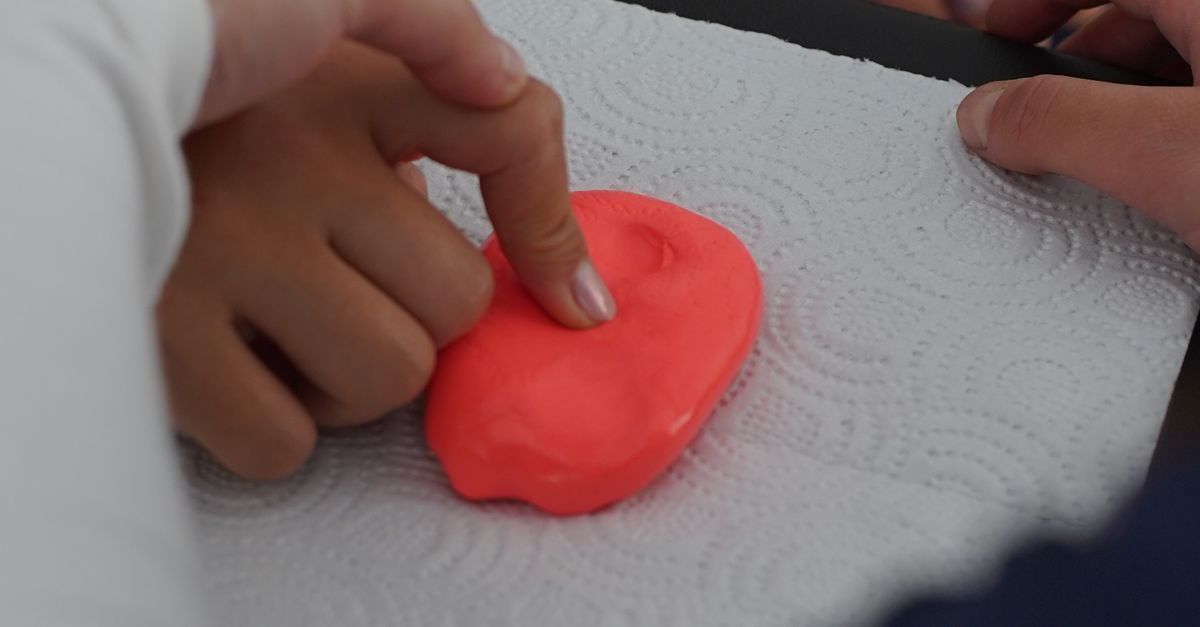
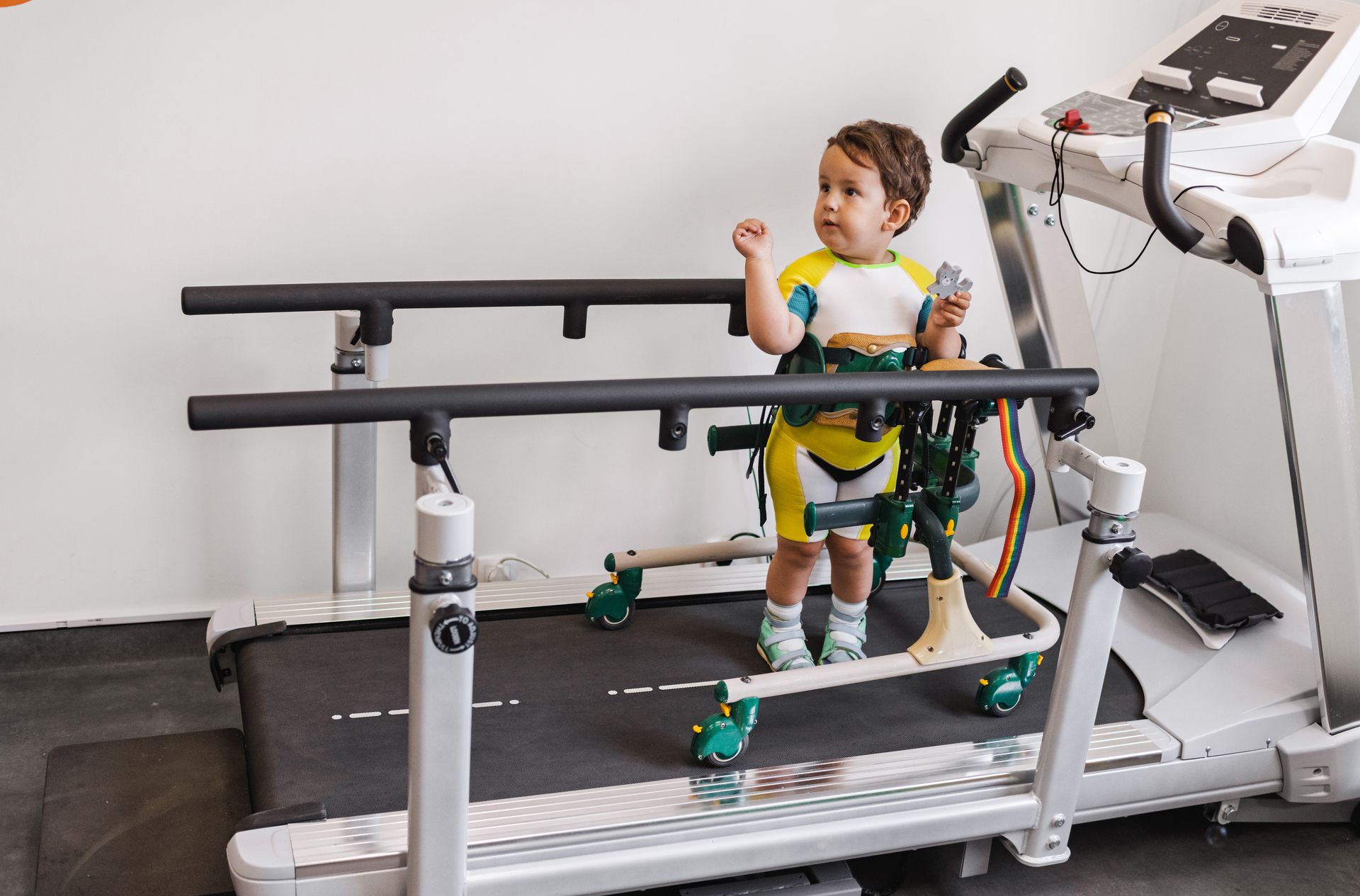
A 2026 randomized controlled trial found that boys with developmental coordination disorder learned a throwing skill better, and held onto it longer, when the target was made to look smaller than it actually was.
Why this research matters for children with dyspraxia
Dyspraxia, known clinically as developmental coordination disorder (DCD), is not a problem of effort or interest. It is a difference in how the brain plans and executes coordinated movement. Two of its most common features are trouble with hand-eye coordination and difficulty learning new motor skills, both of which show up as hallmark signs families notice first.
That second feature is the harder one to solve. A child with dyspraxia may eventually catch a ball, but the skill often takes far more repetitions to build and fades faster once practice stops. So research that changes how efficiently these children learn, rather than simply adding more repetitions, is worth paying attention to.
A new trial published in Research Quarterly for Exercise and Sport tested an unusual idea: leave the physical task exactly as it is, and change only how large the target appears to the child.
What This Means for You as a Parent
The question this study asked is not whether your child can throw. It is whether a small change to what your child sees while practicing can help the skill stick.
That distinction matters because it points to a technique that adds nothing to your child's workload.
What the study examined
The research team conducted a school-based randomized controlled trial across nine public schools. Seventy-five boys with DCD took part, with a mean age of 8.50 years (SD 0.63) and IQ above 70. All of them practiced the same task: throwing a beanbag at a target.
The boys were randomly assigned to one of three conditions, twenty-five in each:
- A visual illusion that made the target look smaller than its true size
- A visual illusion that made the target look larger than its true size
- No illusion at all, which served as the control condition
The physical target was the same in every group. Only its apparent size changed. The researchers first confirmed the illusion was doing its job, then measured throwing during the practice sessions themselves and again in a retention test held 48 hours after the final practice session, with no practice in between.
What This Means for You as a Parent
Three groups of boys threw beanbags at what was physically the same target. One group saw it as smaller, one saw it as larger, one saw it normally.
The 48-hour gap before the final test is the important design detail. Doing well on the day of practice can just mean a child is warmed up. Doing well two days later means something was actually learned.
What the study found
- Did the illusion actually change what the children saw?
The visual illusion significantly altered the children's perception of target size. The manipulation worked as intended, so any group differences can reasonably be traced to perception rather than to a different target.
- Practice phase (acquisition):
Significant differences between the three groups, F(2, 72) = 29.75, p < .001. Perceived target size changed how well the boys threw during training itself, not just afterward.
- Retention test, 48 hours after the last practice session:
Significant differences between the three groups, F(2, 72) = 32.95, p < .001. The advantage held up two days later with no practice in between, which is what separates genuine learning from a temporary performance boost.
- Which condition came out ahead:
The boys who practiced with the target perceived as smaller than it really was showed superior learning of the throwing task. Making the goal look harder, not easier, produced a better result in this trial.
The authors' interpretation is that a target perceived as smaller gives the child a more constrained perceptual goal, which in turn sharpens motor planning. In their conclusion, manipulating visual perception through illusions may be an effective clinical or educational strategy for motor skill training in children with DCD.
What This Means for You as a Parent
The group that saw the target as smaller learned better than both the group that saw it as larger and the group that saw it normally.
The likely reason is that a tighter-looking goal makes the brain plan the movement more precisely. The body then carries out a better-specified plan.
What this means for parents
- The finding is about how practice is set up, not about how much your child practices. It costs no extra time and no extra effort from your child.
- It reinforces something therapists already act on: for a child with dyspraxia, the conditions of practice can matter as much as the number of repetitions.
- It is not a home exercise program. The illusion in this trial was controlled and verified by researchers, and the task was measured trial by trial. Replicating that at the kitchen table is not the takeaway.
- The practical move for families is a conversation, not a purchase. Ask your child's therapist how they structure the visual setup of a task, and whether a tighter target is appropriate for the skill your child is working on.
- Results here describe group averages. Your child's response to any single technique will depend on their own profile, which is what an evaluation is for.
What this means for therapists
For our physical and occupational therapy teams, the alignment is direct. Motor planning exercises and balance and coordination training are already core to how we approach dyspraxia. This trial suggests a low-cost overlay on aiming and object-control work: adjust the perceptual framing of the target rather than the target itself, and bias it toward appearing smaller.
The retention result is the one worth weighing clinically. A 48-hour retention advantage with no intervening practice is a learning effect rather than a performance effect, which is the distinction that decides whether a technique earns a place in a treatment plan.
The limits of this evidence
- The trial enrolled boys only. Seventy-five male participants means the results cannot be assumed to transfer to girls with dyspraxia without further study.
- One task, one skill. Beanbag throwing is a discrete aiming task. Dyspraxia affects continuous, sequential and bimanual tasks too, and the study does not tell us how the technique behaves there.
- Retention was measured at 48 hours. That is long enough to demonstrate learning, and short of telling us whether the advantage lasts weeks or months.
- The setting was nine public schools rather than a therapy clinic, and the sample was drawn from a single country, so replication in clinical populations elsewhere still matters.
- The paper was published online ahead of print in June 2026. It is peer reviewed, and it is also new, which means it has not yet been tested by replication or folded into any clinical guideline.
- Mean participant age was 8.50 years. Younger children are still developing the visual perceptual skills this technique depends on, and the study does not tell us how they would respond.
Questions worth asking your child's therapist
- How do you decide when my child is ready to practice a skill independently rather than with hands-on support?
- What does my child's retention look like between sessions, and how do you measure it?
- Do you adjust the difficulty or the visual setup of a task, and how do you choose which to change?
- Which skills are we currently prioritizing, and why those before others?
- What can we practice at home in a way that supports the plan rather than working against it?
Frequently asked questions
Is dyspraxia the same thing as developmental coordination disorder?
In practice, yes. Developmental coordination disorder is the clinical diagnostic term, and dyspraxia is the term most families and many practitioners use for the same condition. The study described here uses DCD.
Why would making a target look smaller help rather than hurt?
The researchers' explanation is that a smaller-looking target gives the brain a more precisely defined goal to aim at. A more constrained goal appears to produce a more carefully organized movement plan, and the movement that follows is more accurate. Making the goal look easier did not produce the same benefit in this trial.
Can I use a visual illusion with my child at home?
This is not a home technique as tested. The illusion was set up and verified under research conditions, and the outcome was measured throw by throw. The useful step for families is to raise it with your child's therapist, who can judge whether the principle fits the skills your child is working on.
Does this finding apply to speech difficulties associated with dyspraxia?
No. The study measured a throwing task and reported no speech or oral motor outcomes. Speech-related dyspraxia is addressed through separate approaches with their own evidence base.
Does this mean my child needs less therapy?
No. The trial compared different ways of running the same amount of practice. Every group practiced. The finding is about making practice more productive, not about needing less of it.
Where families can turn
Sources and attribution
Zamani MH, Hashemi A, Razeghi R, Abedanzadeh R, Marchant D. Effect of Visual Illusion on Motor Skills Learning in Boys With Developmental Coordination Disorder: A School-Based Randomized Controlled Trial. Research Quarterly for Exercise and Sport. 2026 Jun 17:1-13. Published online ahead of print. PMID: 42307982. DOI: 10.1080/02701367.2026.2684257.
PubMed record: pubmed.ncbi.nlm.nih.gov/42307982. Sample sizes, participant characteristics, F statistics and retention interval reported above are taken directly from the published abstract and were checked against the PubMed record on September 17, 2026.
This article summarizes published research for general educational purposes. It is not medical advice and does not replace evaluation by a licensed pediatric therapist.