Toe walking is something many parents notice when their child first begins to walk. You may see your toddler rise onto their tiptoes when they are excited, dancing, reaching for something, or simply experimenting with movement.
Occasional toe walking can be a normal part of early development. But what happens when your child walks on their toes most of the time, has difficulty keeping their heels down, or continues toe walking as they get older?
Persistent toe walking can have several possible causes, and understanding
why a child is toe walking is an important first step in determining whether treatment may be helpful.
At Progressive Pediatric Therapy, our pediatric physical and occupational therapists evaluate the whole child, not just their feet to understand the factors contributing to their walking pattern and develop an individualized plan to support comfortable, confident movement.
What Is Toe Walking?
Toe walking is a walking pattern in which a child walks primarily on the balls of their feet with limited or inconsistent heel contact with the ground. When toddlers first learn to walk, they often experiment with many different positions and movement patterns. A child may briefly rise onto their toes when excited but then return to standing and walking with their feet flat.
That occasional toe walking is very different from a child who spends a significant amount of their walking time on their toes. One sign that may warrant a closer look is when a child is
toe walking about half of the time or more, particularly if the pattern is consistent across different activities and environments.
The child's age, flexibility, balance, developmental history, strength, sensory preferences, and ability to voluntarily lower their heels are also important considerations.
Why Do Children Walk on Their Toes?
There is no single explanation for toe walking. For some children, toe walking becomes a habitual movement pattern without an identifiable medical cause. This is often referred to as
idiopathic toe walking.
For others, toe walking may be related to strength, muscle tone, sensory processing, balance, alignment, or an underlying neurological or developmental condition.
Core Weakness and Postural Stability
Some children may feel more stable when they rise onto their toes. If a child has decreased core strength or difficulty maintaining their body against gravity, they may recruit additional muscles throughout their body to feel more secure while standing and walking.
A physical therapist may therefore look beyond the child's calves and ankles and evaluate core strength, posture, balance, and overall movement patterns.
Sensory Processing Differences
Sensory processing can also play a role in toe walking. Some children may be sensitive to certain textures under their feet, such as grass, sand, carpet, or other surfaces. Others may seek the sensory input they receive from rising onto their toes and contracting their muscles.
This is one reason occupational therapy may be incorporated into a child's treatment plan.
Muscle Tone and Neurological Conditions
Toe walking can occur in children with differences in muscle tone or neurological development. It may be seen more frequently in children with diagnoses such as:
- Cerebral palsy
- Muscular dystrophy
- Autism spectrum disorder
- Other neurological or developmental conditions
Importantly,
toe walking alone does not mean that a child has one of these diagnoses. An evaluation helps determine whether the walking pattern is occurring on its own or alongside other developmental findings.
Muscle and Tendon Tightness
Parents often assume that tight calf muscles are what initially cause toe walking. Sometimes muscle or tendon tightness is present, but in other children the tightness develops
because they have been toe walking consistently over time.
When a child repeatedly walks with their heels elevated, the calf muscles and Achilles tendon do not move through their full available range as frequently. Over time, this may contribute to decreased ankle flexibility and make getting the heel to the ground even more difficult.
This can create a cycle in which toe walking becomes increasingly challenging to change without intervention
Why a Toe Walking Evaluation Looks at More Than the Feet
One of the most important parts of treating pediatric toe walking is determining
why the child is doing it.
A comprehensive pediatric physical therapy evaluation may assess:
- Walking and running patterns
- Ankle and foot alignment
- Range of motion
- Calf and Achilles tendon flexibility
- Muscle strength
- Core stability
- Muscle tone
- Balance
- Coordination
- Gross motor skills
- Posture
- Developmental history
Therapists may also ask parents questions that seem unrelated to the feet at first. For example, they may ask about sensory sensitivities, early movement patterns, gastrointestinal history, developmental milestones, or how the child interacts with different environments.
The goal is to look at the entire child rather than treating toe walking as simply a foot or ankle problem.
How Physical Therapy Helps With Toe Walking
Physical therapy for toe walking is individualized based on what is contributing to the child's walking pattern.
Treatment may include a combination of:
Strengthening
Therapists may work on strengthening the core, hips, legs, and muscles along the front of the lower leg that help control the ankle and support balance.
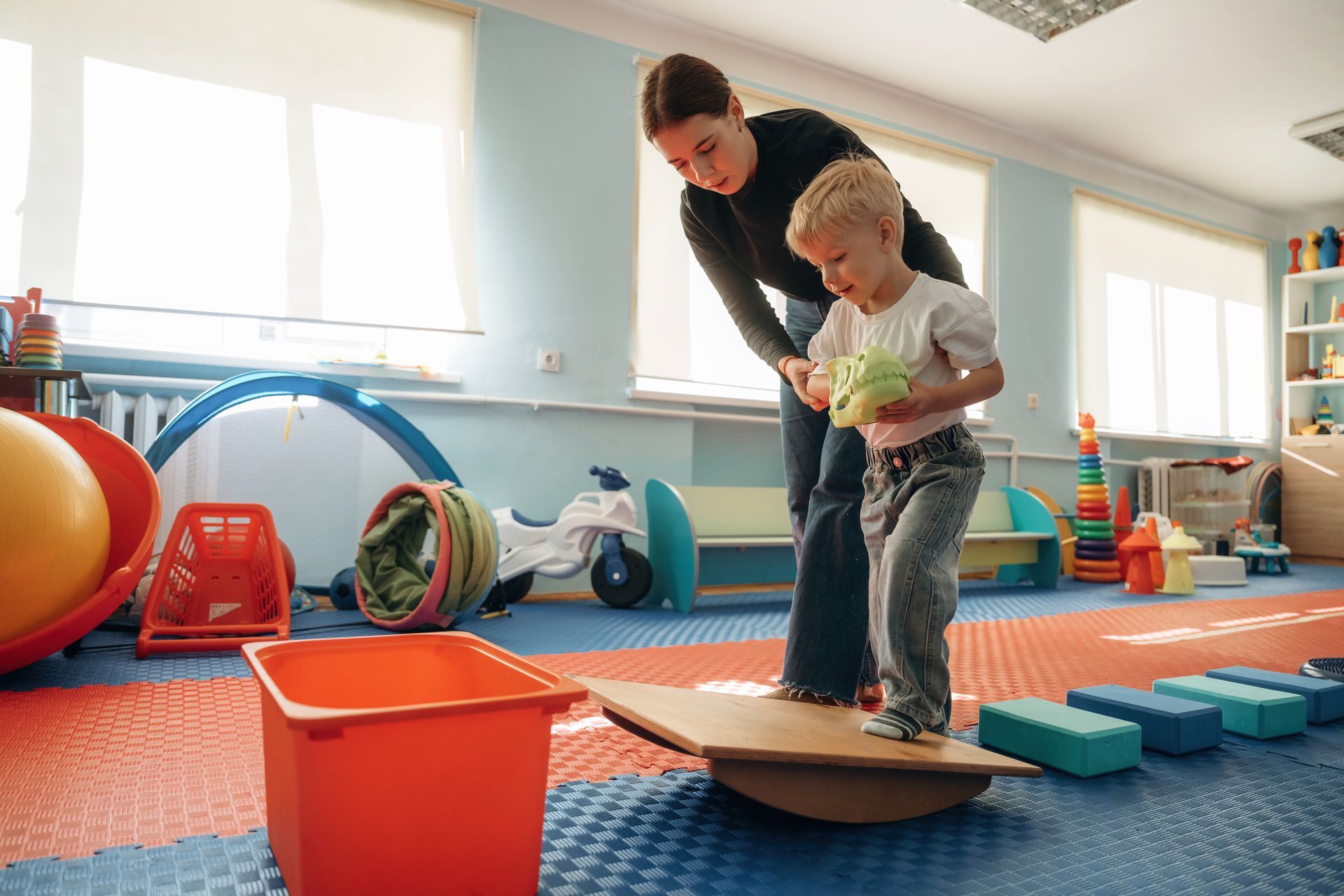
Balance and Coordination Training
Walking on the toes changes how a child manages their center of gravity.
Activities that improve balance, body awareness, and coordination can help children develop greater stability while keeping their heels in contact with the ground.
Gait Training
Rather than repeatedly telling a child to "put your heels down," therapists work to create activities and environments that naturally encourage a more efficient heel-to-toe walking pattern.
Stretching and Range of Motion
If calf or Achilles tendon tightness has developed, treatment may focus on gradually improving ankle mobility while maintaining proper alignment.
Functional Movement
Therapy may incorporate everyday skills such as:
- Squatting to pick up toys
- Walking up and down stairs
- Stepping on and off curbs
- Navigating uneven surfaces
- Running and jumping
- Playground activities
These skills encourage children to use their ankles, feet, and entire bodies in different ways.
How Occupational Therapy Can Help Toe Walking
For some children, physical therapy is only one part of the treatment plan. Occupational therapy may be recommended when sensory processing, body awareness, coordination, or motor planning appear to contribute to the child's toe walking.
An occupational therapist may work on:
- Sensory processing
- Tactile tolerance
- Body awareness
- Motor planning
- Full-body coordination
- Self-regulation
- Functional participation in play and daily activities
Activities might involve swings, climbing, obstacle courses, wheelbarrow walking, different surfaces, and other movement experiences. When appropriate, PT and OT work together so the child's physical alignment, strength, sensory needs, and functional movement are all being addressed.
Orthotics for Toe Walking
Some children benefit from orthotics to help provide alignment and consistent support throughout the day. An orthotic acts almost like the therapist's hands staying with the child after the therapy session ends.
Depending on the child's needs, orthotics may help:
- Improve foot and ankle alignment
- Encourage heel contact
- Increase stability
- Support balance
- Reduce excessive pronation
- Promote a more efficient walking pattern
There are several different types of pediatric orthotics, and the appropriate option depends on the child's flexibility, alignment, strength, and gait pattern. At Progressive Pediatric Therapy, families can also access
collaborative orthotics clinics, where therapists, families, and orthotics specialists work together to determine the most appropriate equipment for each child.
Turtle Braces and Serial Bracing for Toe Walking
Children who already have limited ankle range of motion may need a different approach.
At Progressive Pediatric Therapy,
Turtle Braces may be used for certain children with toe walking and ankle tightness. These braces are custom molded to the child's current available range of motion and can be remolded as flexibility improves.
Rather than forcing the ankle into a position it cannot comfortably reach, the brace can gradually support better alignment while allowing the child to practice walking with increased heel loading.
Over time, the brace may be adjusted as the child's range of motion changes. The ultimate goal is not for a child to remain dependent on bracing. The goal is to help the child develop the mobility, strength, alignment, and motor control necessary to stand and walk successfully with their heels down.
Therapeutic Vibration and Toe Walking
Therapeutic vibration may also be incorporated into treatment for certain children.
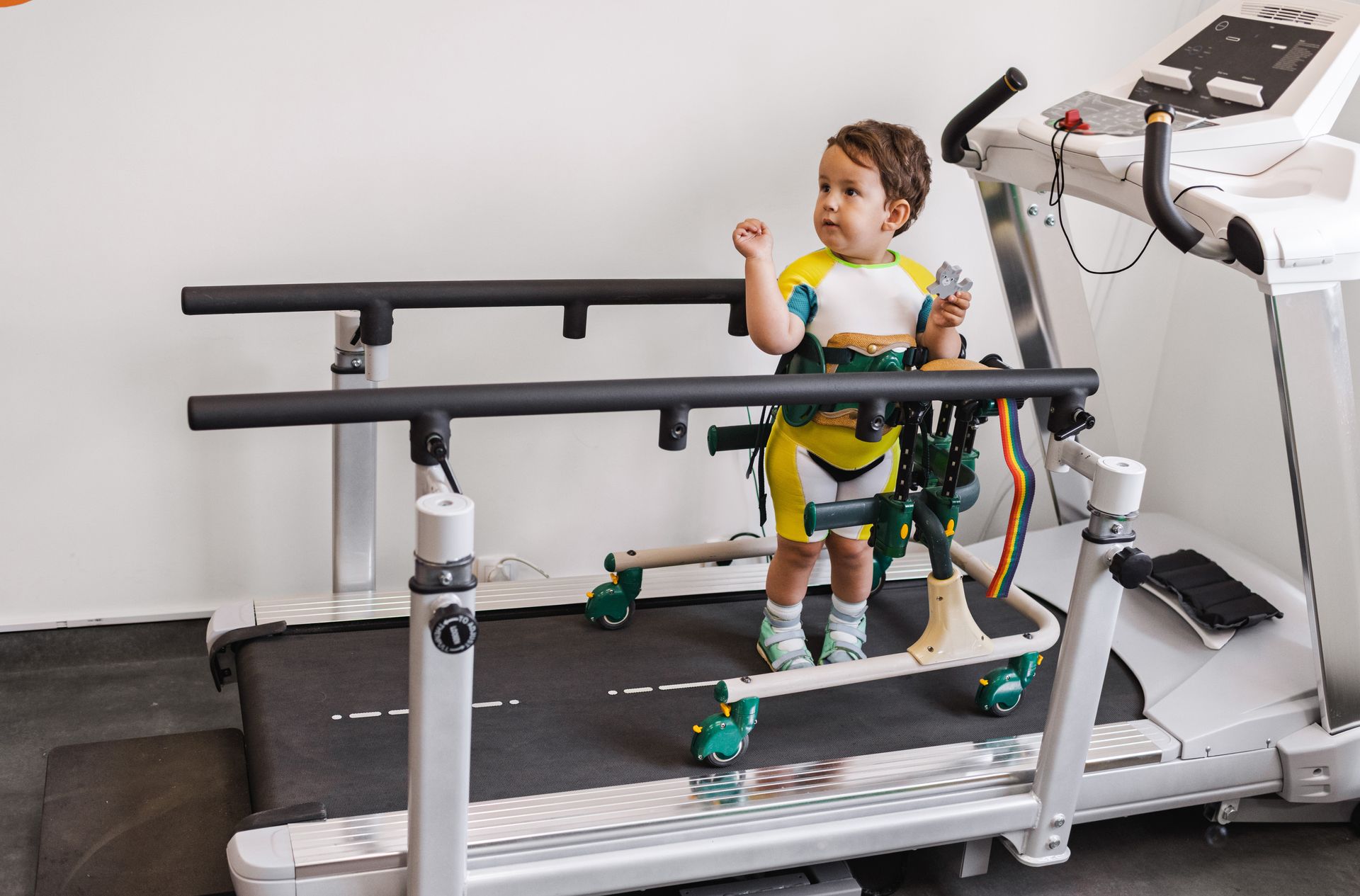
Our therapists may use whole-body vibration as part of activities involving:
- Standing
- Squatting
- Balance
- Weight shifting
- Muscle activation
These activities are incorporated into an individualized therapy program based on the child's needs and treatment goals.
Why Early Intervention for Toe Walking Matters
The earlier persistent toe walking is evaluated, the more opportunity therapists have to address the movement pattern before significant muscle tightness or compensatory habits develop.
A child who begins with occasional toe walking may gradually develop:
- Tight calf muscles
- Reduced ankle flexibility
- Muscle imbalances
- Difficulty squatting
- Balance challenges
- Fatigue during walking
- Difficulty keeping up during physical activities
Early intervention allows therapists to provide appropriate alignment and movement experiences while children are still developing their walking skills. It can be much easier to teach a new movement pattern early than to change one that has been practiced for several years.
Signs Your Child's Toe Walking May Need an Evaluation
Parents should consider discussing toe walking with their pediatrician or pediatric therapist if their child:
- Walks on their toes approximately 50% of the time or more
- Toe walks during most standing and walking activities
- Cannot easily lower their heels when asked
- Immediately returns to their toes after briefly putting their heels down
- Has tight calf muscles or limited ankle movement
- Experiences foot, ankle, or leg pain
- Frequently loses their balance or falls
- Has difficulty squatting
- Tires easily when walking
- Has other strength, coordination, sensory, or developmental concerns
Parents know their children best. If something about your child's walking pattern does not feel right, an evaluation can provide another set of experienced eyes and help determine whether intervention is necessary.
What Does Progress in Toe Walking Therapy Look Like?
Progress looks different for every child. Sometimes a child's walking pattern changes immediately when proper alignment is provided through an orthotic. Parents may suddenly notice their child:
- Making heel contact while walking
- Standing more steadily
- Squatting to retrieve toys
- Moving more slowly and purposefully
- Maintaining balance more easily
- Participating in activities for longer periods of time
Other children require more time to improve flexibility, strength, sensory processing, and motor control.
The goal is not simply to make a child "stop toe walking." Therapy focuses on addressing the reason behind the walking pattern so the child can develop more efficient and comfortable movement.
What Can Parents Do at Home?
Families are an essential part of successful pediatric therapy.
Your therapist may recommend activities that can easily be incorporated into everyday routines.
Wear Prescribed Orthotics Consistently
If your child has been prescribed orthotics or braces, following the recommended wear schedule is important. If the equipment causes discomfort, pressure areas, or no longer fits properly, contact your therapy team rather than discontinuing it without guidance.
Try Supported Calf Stretching During Daily Activities
One strategy sometimes recommended for appropriate children is standing on a small incline or therapy wedge with the toes slightly elevated and heels supported.
For example, a therapist may recommend incorporating this into a supervised routine such as brushing teeth.
Your child's therapist should determine whether this type of activity is appropriate and show you the correct positioning.
Practice Functional Movement
Look for natural opportunities throughout the day to encourage ankle movement and heel contact, including:
- Walking up and down stairs
- Stepping on and off curbs
- Squatting during play
- Navigating playground equipment
- Walking on different surfaces
Your therapist can help identify the activities that are safest and most beneficial for your child.
Does Toe Walking Go Away on Its Own?
Some young children do naturally stop toe walking as their walking skills mature.
However, persistent toe walking should not automatically be assumed to be something a child will "grow out of."
If your child is frequently walking on their toes, struggling to keep their heels down, developing tightness, or showing other developmental concerns, seeking an evaluation early can help determine whether treatment is needed.
An evaluation does not automatically mean your child will need ongoing therapy. Sometimes families simply need reassurance, monitoring, or a few strategies to practice at home.
Pediatric Toe Walking Therapy in Palm Beach County
Progressive Pediatric Therapy provides specialized
toe walking therapy for children throughout Palm Beach County.
Our multidisciplinary team of pediatric physical and occupational therapists evaluates the whole child to understand the physical, sensory, developmental, and functional factors that may be contributing to toe walking.
Treatment options may include:
- Pediatric physical therapy
- Occupational therapy
- Gait training
- Strength and balance activities
- Sensory-based intervention
- Orthotics evaluations and fittings
- Turtle Bracing
- Therapeutic vibration
- Home programs and caregiver education
Every treatment plan is individualized to the child's specific needs.
Learn more about our Pediatric Toe Walking Therapy in Palm Beach County.
Helping Children Move With Confidence
Toe walking can have many different causes, which is why there is no single treatment that works for every child.
The most important step is understanding the reason behind the walking pattern.
With early evaluation, individualized treatment, and consistent support at home, many children can make meaningful improvements in their walking, balance, mobility, and overall confidence.
If you're concerned about your child's toe walking, balance, or mobility, our team at Progressive Pediatric Therapy is here to help.
Contact us to schedule a pediatric physical therapy evaluation or learn more about our toe walking treatment services.