A plain-language look at a 2026 study in the Journal of Pediatric Orthopaedics B that followed children treated surgically for persistent toe walking and found that those with autism or sensory processing disorder were roughly seven times more likely to return to toe walking than children with no identified cause. Written for parents who have wondered whether their child's toe walking is "just a habit," and for therapists and physicians deciding how to treat it. We explain what the study examined, what it found, what it cannot yet prove, and why the sensory piece belongs at the front of the conversation, not the end.
Why This Topic Matters
Most toddlers walk on their toes at some point. For the majority, it fades on its own by age two or three. When it persists, the standard label is idiopathic toe walking, which simply means toe walking with no identified medical cause: no cerebral palsy, no muscular dystrophy, no tethered cord, no neurological finding on exam. The word "idiopathic" can sound reassuring, but it also carries a hidden assumption that the toe walking is purely mechanical and can be fixed mechanically, through stretching, casting, bracing, or, when those fail, surgery to lengthen the calf muscle or Achilles tendon.
A growing body of clinical observation suggests that a meaningful share of children who toe walk are also children who process sensory information differently. Many are autistic; many others have
sensory processing disorder without an autism diagnosis. For these children, walking on the toes may not be a habit at all. It may be a strategy: a way to reduce input through the soles of the feet, to seek input through the calves and ankles, or to feel more stable when the body's sense of position and balance is unreliable. If that is true, then fixing the tendon does not fix the reason the child is on their toes. A 2026 study published in the Journal of Pediatric Orthopaedics B put a number on that idea.
What This Means for You as a Parent
If your child walks on their toes past the toddler years, the first question a good team should ask is not "how do we stop it" but "why is your child doing it." For some kids the answer is tight muscles. For others, especially kids with autism or sensory processing differences, toe walking may be their body's way of managing how the ground feels or how stable they feel. That difference matters because it changes which treatments are likely to last.
What the Study Examined
The study, led by Zak and colleagues, was a retrospective cohort analysis. The researchers looked back at children who had undergone surgical correction for persistent toe walking and sorted them into two groups: children with idiopathic toe walking and no other diagnosis, and children whose toe walking occurred alongside autism or a documented sensory processing disorder. They then compared how often toe walking came back after surgery in each group.
For therapists: a retrospective cohort design means the authors did not assign children to groups or control treatment; they analyzed existing records. This is the right design for a question like recurrence after surgery, where a randomized trial would be neither practical nor ethical, but it carries the usual limitations of chart-based research, discussed below. Note also that this is a surgical cohort. Every child in it had already failed or bypassed conservative management, so the sample is weighted toward the more persistent end of the toe-walking spectrum.
What This Means for You as a Parent
The researchers went back through medical records of children who had surgery to correct toe walking and asked a simple question: which kids started toe walking again afterward? Then they compared kids with autism or sensory processing disorder to kids with no known reason for toe walking.
What the Researchers Found
The headline finding is stark. Children with autism or sensory processing disorder were roughly seven times more likely to experience recurrent toe walking after surgery than children with idiopathic toe walking. In other words, the same procedure, performed for the same visible gait pattern, produced very different durability depending on what was driving the gait pattern in the first place.
For therapists: a seven-fold difference in recurrence is a large effect for a surgical outcome study, and it is consistent with the clinical hypothesis that sensory-driven toe walking is behaviorally maintained rather than structurally maintained. Lengthening a shortened Achilles tendon addresses the contracture that toe walking produces over time. It does not address the sensory drive that produced the toe walking. If that drive is still present after the child heals, the pattern can re-establish itself, and with it, the tightness. Exact recurrence percentages, cohort size, and follow-up duration should be quoted from the abstract at publish (see brief).
What This Means for You as a Parent
Kids whose toe walking came with autism or sensory processing disorder were about seven times more likely to go back to toe walking after surgery than kids whose toe walking had no known cause. The surgery lengthened the tight muscle, but for many of these children, tight muscles were never the whole story.
Why Sensory Processing Would Change the Outcome
Sensory processing refers to how the nervous system receives, organizes, and responds to input from the body and the environment: touch, pressure, movement, body position (proprioception), and balance (the vestibular sense). Children with sensory processing differences may be over-responsive to some inputs and under-responsive to others, and they often develop movement patterns that help them regulate. Toe walking fits that picture in several ways. Walking on the toes reduces the surface area of the foot touching the ground, which can matter to a child who finds textures or pressure on the soles uncomfortable. It also loads the calf muscles and ankle joints, which provides strong proprioceptive feedback that some children actively seek. And for a child whose vestibular system gives unreliable information about where the body is in space, the stiff, high-tone posture of toe walking can feel more stable than a relaxed heel-toe gait.
None of this is a malfunction to be corrected in the child. It is a solution the child's body has found to a problem the rest of us may not perceive. Treatment that ignores the problem and removes the solution is likely to see the solution return. That is what this study appears to document.
What This Means for You as a Parent
Think of it this way: if the ground feels strange or your body feels wobbly, walking on your toes might be the most comfortable and steady way to move. Surgery can lengthen the muscle, but it cannot change how the ground feels. Unless the sensory piece is addressed too, the child may go right back to the pattern that felt safe.
What This Means for Parents
- Persistent toe walking past age two or three deserves an evaluation, but the evaluation should include the sensory and developmental picture, not only range of motion at the ankle.
- If your child is autistic or has sensory processing differences, ask the team how those differences factor into the treatment plan. This study suggests they are central, not incidental.
- Conservative approaches come first for most children: stretching, strengthening, gait retraining, orthotics, sometimes serial casting. For sensory-driven toe walking,
sensory integration work is often layered in so the child has other ways to get the input or stability they are seeking.
- Surgery is not off the table for children with autism or sensory processing disorder, but this research suggests it should be paired with a plan for what happens afterward, since the underlying sensory drive does not go away with the tendon lengthening.
- Recurrence is not a failure on your part or your child's. It is a signal that something other than muscle length is maintaining the pattern.
What This Means for Therapists and Clinicians
The practical implication is a screening one. Before any child is labeled idiopathic and routed toward a mechanical treatment pathway, a sensory processing screen and a developmental history are worth the time. Children who present with toe walking alongside tactile defensiveness on the feet, proprioceptive seeking, vestibular insecurity, or a known or suspected autism diagnosis should be treated as a distinct group with a different prognosis for surgery-alone approaches. For these children, the
toe walking plan is better framed as a sensory-motor plan: address the contracture, yes, but also build the child's tolerance for heel contact, offer alternative sources of the input they are seeking, and train heel-toe gait in contexts where the child feels regulated and safe.
For orthopedic and surgical colleagues, this study is a useful piece of counseling data. A family whose child has autism or sensory processing disorder should hear, before consenting to surgery, that recurrence rates in this population appear to be substantially higher and that postoperative therapy targeting the sensory component is likely to be part of the picture. For occupational and physical therapists, it is a reason to be at the table early rather than after recurrence.
It is also a reminder that
sensory-motor presentations rarely sit inside a single diagnostic box. Toe walking is a gait finding, sensory processing is a regulation finding, and autism is a developmental diagnosis, and yet in the clinic they arrive together often enough that treating them in isolation is likely to underperform.
What This Means for You as a Parent
For the professionals on your child's team, this study is an argument for checking the sensory side before deciding on a treatment path. It is also an argument for your child's therapists and any surgeon to be talking to each other, because the best plan for a sensory toe walker usually involves both.
The Limits of the Evidence
This is a single retrospective cohort study, and it should be read as such. A few limitations matter for interpreting it honestly. First, retrospective designs depend on what was recorded in the chart. If sensory processing disorder or autism was under-documented in some children, those children would have been misclassified as idiopathic, which would tend to blur the true difference between groups rather than exaggerate it, but it still means the groups may not be cleanly separated. Second, the study looked at children who had already reached surgery. It does not tell us how sensory-driven toe walkers respond to conservative care compared with idiopathic toe walkers, which is arguably the more important question for most families. Third, a recurrence rate does not by itself tell us why recurrence happened. The sensory explanation is plausible and consistent with clinical experience, but this study demonstrates an association, not a mechanism. Fourth, the exact effect size, sample size, and follow-up period should be read directly from the published abstract; the "roughly seven-fold" figure quoted here is a paraphrase pending verification. Finally, findings from one surgical center or dataset may not generalize to all populations or all surgical techniques.
What the study does establish is that the assumption behind the word "idiopathic," that the gait pattern is the whole problem, does not hold for a specific and identifiable subgroup of children. That is a meaningful contribution even with the caveats above.
What This Means for You as a Parent
This is one study looking backward at medical records, so it is strong enough to change how teams should think but not strong enough to settle every question. It tells us that kids with autism or sensory processing disorder are much more likely to return to toe walking after surgery. It does not tell us exactly why, and it does not tell us how those same kids do with therapy instead of surgery. More research is needed on both.
Signs the Sensory Piece May Be Part of Your Child's Toe Walking
- Toe walking that continues past age three, or that appears in an older child who previously walked flat-footed
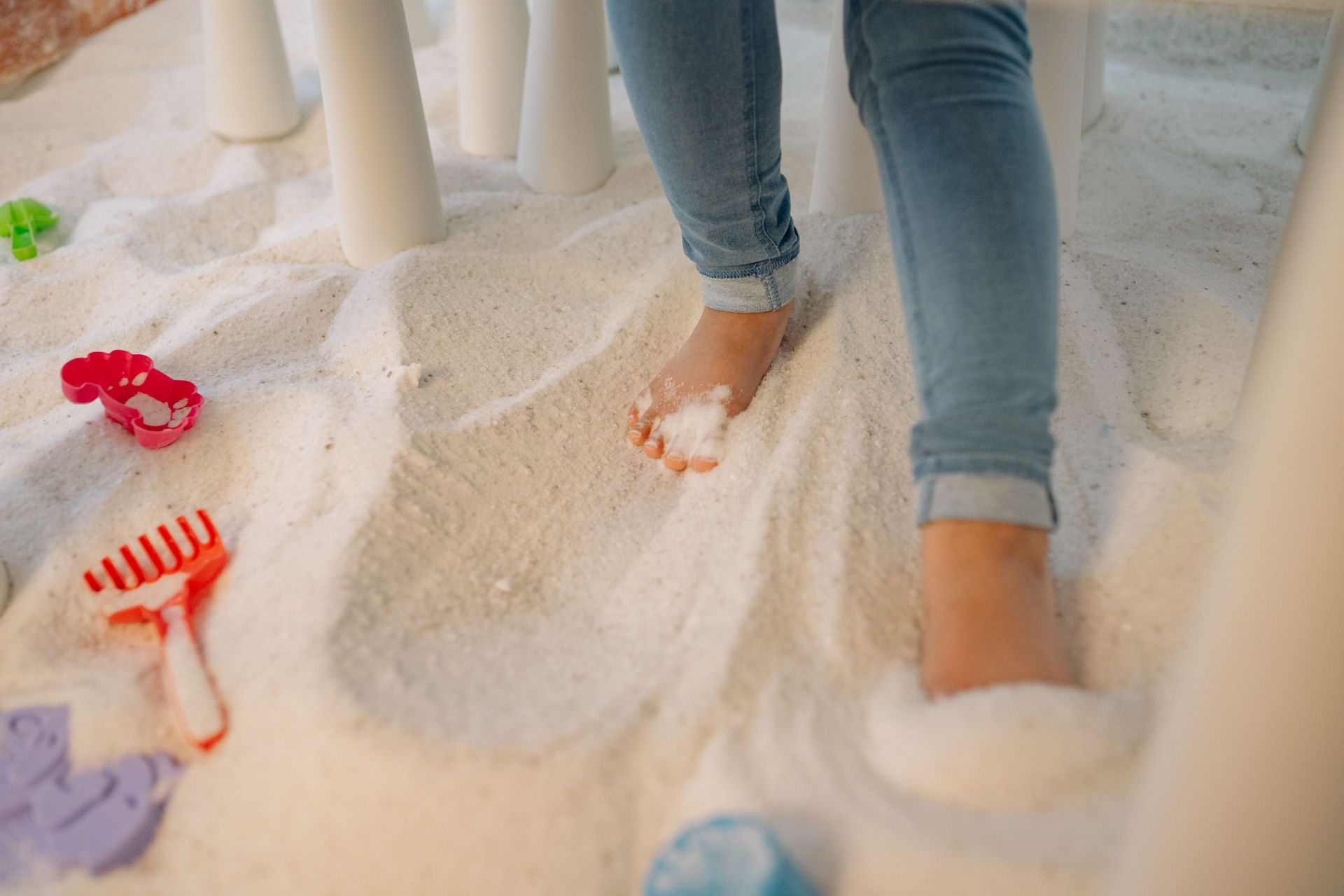
- Strong reactions to textures underfoot: refusing to walk barefoot on grass, sand, or certain floors, or insisting on shoes or socks at all times
- Seeking heavy input: jumping, crashing, stomping, or pressing into surfaces
- Difficulty with balance, stairs, or uneven ground; a preference for a stiff, "on guard" posture
- Toe walking that increases with excitement, stress, or sensory overload and decreases when the child is calm
- Other signs of sensory processing differences: sensitivity to sound, clothing, or grooming; difficulty settling; unusually high or low pain response
- An existing autism diagnosis, or developmental concerns that have prompted an
autism evaluation
None of these signs is diagnostic on its own. Together, they are a reason to ask for a sensory-informed evaluation alongside the orthopedic one.
Frequently asked questions
Does toe walking mean my child has autism?
No. Most children who toe walk are not autistic, and many autistic children never toe walk. Toe walking is more common in autistic children and in children with sensory processing differences, which is why it is worth looking at the whole developmental picture, but it is not a sign of autism by itself.
Causes range from neuromuscular conditions such as cerebral palsy, to tight calf muscles, to sensory processing differences, to no identifiable cause at all (idiopathic). A thorough evaluation rules out medical causes first, then looks at muscle length and, increasingly, sensory processing.
If my child has sensory processing disorder, should we avoid surgery for toe walking?
Not necessarily. Surgery can still be appropriate when a contracture is severe. This research suggests that for children with autism or sensory processing disorder, surgery alone is less likely to hold, so it should be planned alongside therapy that addresses the sensory drive, and families should be counseled about the higher recurrence risk.
Can therapy alone help sensory-driven toe walking?
For many children, yes. Physical therapy addresses muscle length, strength, and gait pattern; occupational therapy using a sensory integration approach addresses the underlying processing differences. This study did not compare therapy to surgery, so the size of that benefit is not something the study can quantify.
At what age should I have toe walking evaluated?
If toe walking persists past age two to three, is getting worse, is asymmetric (one side only), or comes with any other developmental concern, it is reasonable to ask for an evaluation rather than wait.
Where Families Can Turn
Progressive Pediatric Therapy evaluates and treats toe walking and sensory processing differences together, with physical and occupational therapists who work as one team across Palm Beach County, Lake Worth, and Boca Raton. If your child walks on their toes and you have wondered whether there is more to it than tight muscles, our team is glad to talk through what a sensory-informed evaluation would look like.
Learn more about how we approach sensory processing disorder or contact us to schedule an evaluation.
Sources & Attribution
Primary study, retrieved from PubMed: Zak et al. Recurrent toe walking: idiopathic versus concomitant sensory processing disorders. J Pediatr Orthop B. 2026. PMID: 42244456.
https://doi.org/10.1097/BPB.0000000000001361
Full author list, volume/issue, and page numbers to be completed from the PubMed record at publish.
Background on sensory processing and typical gait development reflects general pediatric therapy practice; no additional external sources were reproduced.