New research shows AAC can help young children build sentences, not just point to single words
Written for parents of children who use, or are considering, a communication board or device, and for the speech-language pathologists who support them. This article is built around a 2026 randomized controlled trial of the AAC Generative Language Intervention (AAC-GLI) and what it tells us about teaching grammar to children who communicate with symbols.
Why this topic matters
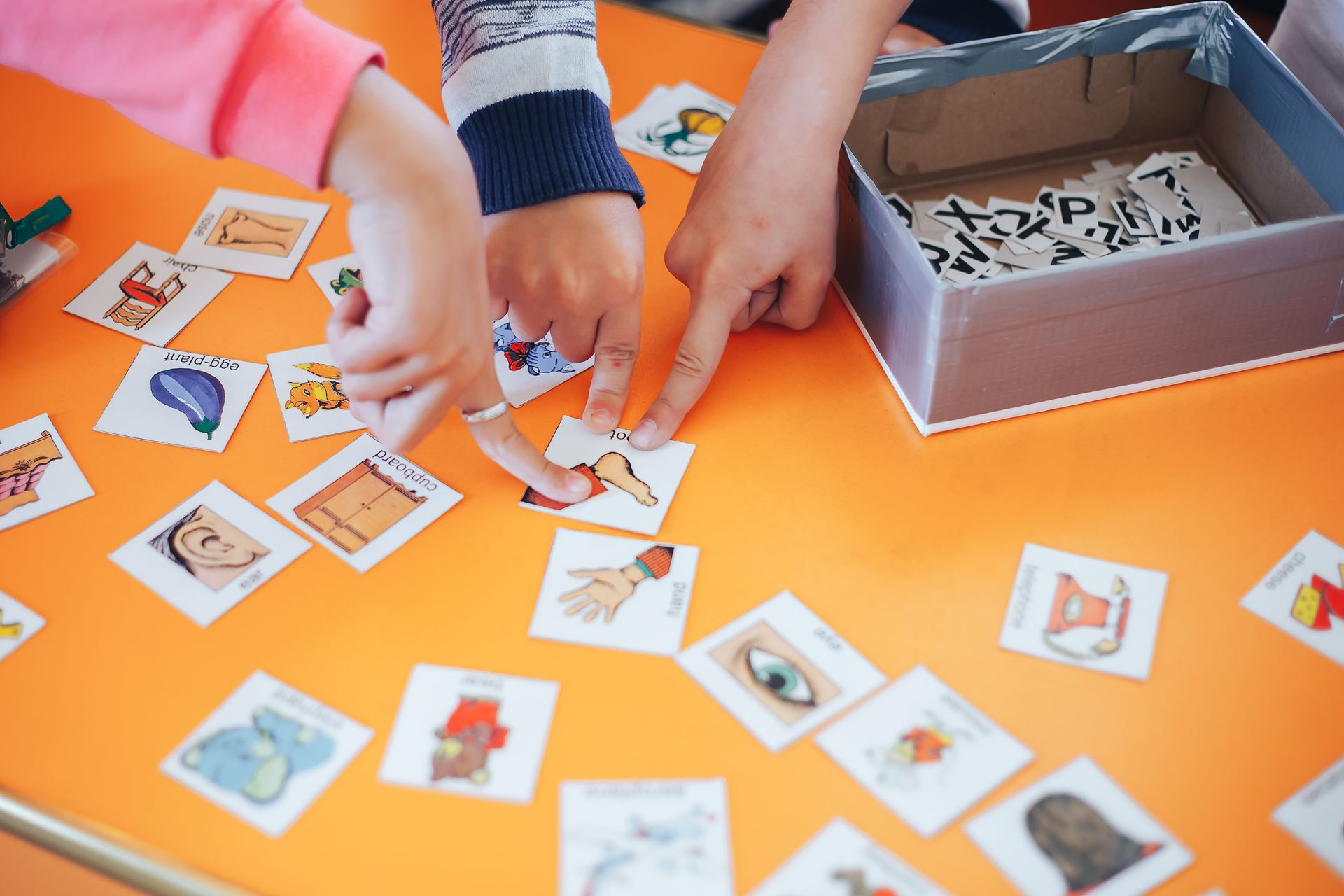
Augmentative and alternative communication (AAC) is any method a child uses to communicate besides spoken words: sign language, gestures, picture boards, and speech-generating devices or tablet apps that speak a message when a button is pressed. Children reach for these tools for many reasons. Some have
childhood apraxia of speech, a neurological motor-speech disorder in which the brain struggles to plan and sequence the movements needed for clear speech even though muscle tone and reflexes are typical. Others have
cerebral palsy, autism, or broader
language processing delays. Childhood apraxia of speech alone is thought to affect only one to two children in a thousand, and children do not simply grow out of it; they make progress with skilled therapy.
For many families, the first question about AAC is not how it works but whether it is safe: will handing a child a device make them stop trying to talk? It is the worry that keeps parents up at night, and it deserves a direct answer. The research literature, along with the position of major clinical bodies, is consistent: AAC facilitates speech rather than holding it back. Children given access to AAC tend to develop speech at an equivalent or even faster rate, likely because a reliable "fallback" encourages them to make more communication attempts. AAC is meant to be used alongside spoken language, not instead of it, which is why clinicians often describe it as a risk-free addition to therapy rather than a replacement for speech.
Here is the gap the new study set out to close. When children are given AAC, therapy often focuses on the basics: requesting ("I want juice") or building a bank of single-word vocabulary. That is a reasonable starting point, but it can quietly cap a child at the one-word level. Real communication needs grammar: combining symbols into longer, more complete, more flexible messages. The question the researchers asked was whether preschoolers who use AAC can be taught to do exactly that.
What this means for you as a parent
AAC is any way a child communicates without using their voice. It can be sign language, pointing, a picture board, or a tablet that speaks out loud when your child taps a button.
Many parents worry that giving a child a device will make them stop trying to talk. The research says that does not happen. Kids who use AAC often learn to talk just as fast, and sometimes faster. Having a way to be understood makes a child try to communicate more, not less.
There is one more thing to know. Therapy for kids who use AAC often stops at single words, like tapping the button for juice. That is a fine place to start. But it can leave a child stuck at one word at a time. This study asked whether kids can be taught to do more than that.
What the study examined
According to PubMed, the trial was published by Binger and colleagues in the
Journal of Speech, Language, and Hearing Research in 2026 (DOI: 10.1044/2026_JSLHR-25-00516). It was a randomized controlled trial, the study design that most convincingly links a treatment to an outcome, involving 40 preschool-aged children who required AAC. The children had a range of underlying conditions, including childhood apraxia of speech and cerebral palsy, and shared one key feature: their ability to understand language was relatively intact, even though their ability to express it was limited.
Families of every child received a half-day AAC workshop. The children in the intervention group also received 28 play-based AAC-GLI sessions. Progress was measured with a purpose-built metric called weighted mean length of utterance in symbols, or W-MLUSym. In plain terms, it captures how long and how grammatically complete a child's messages are when those messages are built from symbols rather than spoken words. It was developed specifically for children who communicate through aided means, which matters because standard spoken-language measures do not fit a child who talks with a device.
For therapists: the design is worth noting. Randomization plus growth modeling lets the authors test not just whether groups differed at the end but whether the intervention changed each child's trajectory over time. The use of an aided-language outcome measure, rather than a spoken-language proxy, is a methodological strength for this population.
What this means for you as a parent
This was a strong kind of study. 40 preschoolers were sorted into two groups by chance. Every family got a half day class about AAC. The kids in one group also got 28 extra play sessions that taught them to build sentences on their device.
All of the kids in the study understood language pretty well. Their hard part was getting words out, not taking words in.
The scientists measured progress with something called W-MLUSym. That name looks scary, but it simply counts how long and how complete a child's messages are when the messages are built from symbols. Regular tests count spoken words, and those do not fit a child who talks with a device.
What the researchers found
The intervention group showed superior gains in W-MLUSym compared with the control group. The growth modeling indicated that being in the intervention condition was a significant moderator of change over time: children who received AAC-GLI made statistically significantly greater increases in the length and grammatical completeness of their symbol-based messages, while children who received only the workshop stayed close to where they started.
Translated for parents: the children who got the program learned to string together longer, more sentence-like messages on their AAC system, moving beyond single requests. The children whose families only attended the workshop did not change much on this measure. It is worth being precise about what the published summary reports. According to PubMed, the abstract states the direction and the statistical significance of the difference; the exact size of the effect is detailed in the full paper (DOI: 10.1044/2026_JSLHR-25-00516) rather than the summary.
What this means for you as a parent
The kids who got the extra play sessions learned to put symbols together into longer messages that sounded more like real sentences. They moved past asking for one thing at a time. The kids whose families only took the class mostly stayed where they started.
One honest note. The short summary of the study says the difference was real and went in a good direction. It does not say exactly how big the difference was. That number is in the full paper.
The point for you is simple. Building sentences on a device is something a child can be taught. It does not have to happen on its own.
What AAC-GLI actually is
The "generative" in AAC Generative Language Intervention is the whole point. Generative language means creating new combinations of symbols to say things the child has never said before, rather than tapping out a handful of memorized phrases. The program is play-based, woven into activities a preschooler finds naturally engaging, and it deliberately targets grammar, teaching children to combine symbols into fuller utterances. The parallel caregiver workshop reflects a well-established principle in AAC: the people around the child have to model and support the system for it to take hold, because AAC should never be used silently.
What this means for parents
If your child uses AAC, this study is a reason for optimism and a reason to ask more of the therapy plan. The goal does not have to stop at "I want." With the right instruction, children who communicate with symbols can learn to build real sentences, and doing so expands what they can say, ask, refuse, and share. It is reasonable to ask your child's speech-language pathologist whether expressive-grammar goals, not only vocabulary or requesting goals, are part of the plan.
It is also a reminder that choosing AAC is not choosing against speech. A device gives your child a voice now while speech work continues. If you have been hesitant because of the fear that a device will "replace" talking, the weight of the evidence should ease that worry. If your child understands far more than they can say, or gets frustrated trying to make themselves understood, an evaluation is a sound next step rather than a cause for alarm.
What this means for therapists and clinicians
This trial adds randomized evidence that grammar-focused aided-language targets are achievable in the preschool window, and it gives clinicians something concrete to point to when justifying goals that go beyond requesting and single-word vocabulary. It fits within, rather than replaces, motor-speech intervention: for a child with
apraxia or another speech sound disorder, established motor-speech approaches such as Dynamic Temporal and Tactile Cueing (DTTC) or Rapid Syllable Transition Treatment continue to target speech production, while AAC supports functional communication in parallel.
Practical takeaways worth carrying into planning: the dosage tested was 28 play-based sessions paired with caregiver training, W-MLUSym offers an outcome-tracking option suited to aided communicators, and the clearest candidacy signal in this sample was relatively intact receptive language. As always, a full AAC evaluation is the right mechanism for matching system to child. PPT4Kids' own primer on
the what, who, when, where and why of AAC is a useful starting point to share with families beginning that process.
What this means for you as a parent
That last section was written for speech therapists, so it uses a lot of their work words. Here is the short version.
The study gives therapists proof they can point to when they set goals that go past asking for things. It does not replace speech work. A child with apraxia still does the mouth and sound practice they have always done. AAC runs right alongside it.
There are a few things you can ask about at your next visit. The study used 28 play sessions plus training for parents. There is a tracking tool made just for kids who use devices, so progress can be shown in numbers instead of guesses. And the kids who did best already understood a lot of language.
DTTC and Rapid Syllable Transition Treatment are just the names of two speech practice methods. If your child has apraxia, it is fair to ask whether one of them is part of the plan.
The limits of the evidence
This is one trial, and an honest read has to name its boundaries. The sample was small at 40 children, so the findings need replication before anyone treats them as settled. Just as important, the outcome measured was aided grammar built from symbols, not spoken intelligibility; the study does not show that AAC-GLI improves a child's speech production, only their symbol-based expressive language. The children had mixed underlying diagnoses and shared relatively intact receptive language, so the results may not generalize to children whose comprehension is also significantly affected. And the published summary does not establish how well the gains held up over time or carried into everyday settings outside of sessions.
The wider context matters too. A systematic review of childhood apraxia of speech treatments could not determine whether AAC promotes speech gains compared with other interventions; the interventions with the strongest evidence for improving speech itself remain motor-speech approaches like DTTC and Rapid Syllable Transition Treatment. AAC is a communication support and, on this evidence, a promising route to expressive grammar, but it is not a motor-speech cure. This is emerging, encouraging evidence layered onto an established practice, not a new standard of care.
What this means for you as a parent
This is good news, but it is one study, and it has limits worth knowing.
Only 40 kids took part. That is a small group. Other scientists need to repeat the study before anyone calls it settled.
The study measured sentences built on a device. It did not measure clearer speech. So it does not prove that this program helps a child talk out loud.
Every child in the study already understood language well. If your child also has a hard time understanding words, these results may not apply the same way. And nobody checked whether the gains lasted, or whether the kids used their new skills at home and at school.
The takeaway is this. AAC is a strong way to help your child say more. It is not a cure for speech problems. It is fair to ask about both.
Signs it may be worth asking about AAC or a speech-language evaluation
- Your child understands noticeably more than they can express (receptive language outpaces expressive).
- Communication attempts end in frustration, meltdowns, or giving up.
- Your child has been stuck at single words or requests despite ongoing therapy.
- Speech is limited, hard to understand, or marked by inconsistent errors and visible "groping" for sounds, which can point to childhood apraxia of speech.
- A child already using AAC is only requesting and has not been given goals for combining symbols into longer messages.
Frequently asked questions
Will an AAC device stop my child from learning to talk?
No. Research and major clinical bodies agree that AAC facilitates rather than hinders speech, and children with AAC access often develop speech at an equivalent or faster rate. It is used in addition to spoken-language work, not instead of it.
Is AAC only for children who are completely nonverbal?
No. AAC is appropriate for any child whose speech is not yet adequate to communicate everything they need to, including children with limited or unreliable speech, not only those who do not speak at all.
Can a child really learn grammar on a communication device?
This trial suggests yes. Preschoolers who received the AAC Generative Language Intervention made significantly greater gains in building longer, more complete symbol-based messages than children who did not.
Early. Many children who need AAC begin around age two with simple messaging, then progress toward fuller sentences as they grow. Earlier communication support can reduce frustration while other skills develop.
Does choosing AAC mean giving up on speech?
No. For most children AAC is a bridge that provides a voice now while speech continues to develop, and speech is still modeled and encouraged throughout.
Where families can turn
Progressive Pediatric Therapy's speech-language pathologists evaluate whether AAC is a fit and, when it is, build a plan that includes expressive-grammar goals rather than stopping at requesting. If your child has apraxia, a related speech sound disorder, or communicates in ways that are hard for others to understand, our
pediatric speech therapy team can help you figure out the right next step.
Sources and attribution
Primary study, retrieved from PubMed: Binger C, Harrington N, Hahs-Vaughn DL, Kent-Walsh J. Augmentative and Alternative Communication Generative Language Intervention: A Randomized Controlled Trial.
Journal of Speech, Language, and Hearing Research. 2026;69(6):2654-2678. PMID: 42223368.
https://doi.org/10.1044/2026_JSLHR-25-00516
Background context drew on the American Speech-Language-Hearing Association (ASHA) Practice Portal and Evidence Maps on childhood apraxia of speech, and on published guidance from clinical organizations including Apraxia Kids and Child Apraxia Treatment regarding AAC and speech development. These sources provided general background and were paraphrased, not reproduced.