Assistive Technology (AT) Resources

Progressive Pediatric Therapy • June 29, 2016
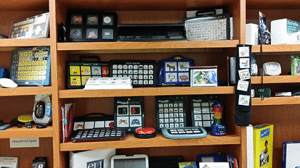
A shelf filled with a variety of electronic devices
(FAAST Inc., 2016)

Children with special needs or other disabilities require assistive technology (AT) such as equipment, software, or product systems that would can assist them in all aspects of daily living such as walking, feeding, or communicating. This specialized AT can be very costly for families. Here are some websites and resources for additional information and used equipment for sale or loan:

The Florida Alliance for Assistive Services and Technology, Inc. serves Floridians with disabilities by providing free access to information, referral services, educational programs, and publications in accessible formats on topics such as disability rights, laws, and policies. They also provide assistive technology (AT) device loans as well as funding opportunities for AT. With loans, you can test drive the equipment or software prior to committing to buying one. They also have a new online system where you can find new or used AT equipment or free or at a reduced price. Visit  https://www.faast.org/ for location information.

Facebook is another great resource regarding AT as well as groups for the resale of new or used equipment. Search for Facebook groups that may relate to your child’s disability or disorders. These social networks assist in providing resources, information, and a support community to ask questions regarding a variety of topics. Facebook also has groups geared towards the resale of gently used or new equipment. For example the group “special needs gently used medical equipment for sale” is a group in which the community can post different medical equipment that is for sale. Other groups exist for specific regions of Florida or the country. Just search general terms such as: special needs, medical equipment.

Lastly, check out our website  www.ppt4kids.com  and click “New Patients” for a list of pediatric partners in our community. This list contains many different vendors with whom we collaborate with for medical and therapy equipment. You can also contact us to schedule an  appointment at one of our wheelchair/adaptive equipment clinics to get evaluated, measured, and fitted  with wide range of adaptive equipment, including complex seating, custom molded seating, power  wheelchairs, and alternative access methods for power mobility such as use of head arrays, touch pads, etc.

The post Assistive Technology (AT) Resources appeared first on PPT4Kids.

By Aimee Brueck August 4, 2026
Many families today raise children in homes where more than one language is spoken. While this is a wonderful gift, it can also bring questions and concerns about speech and language development. Parents often wonder if learning multiple languages will confuse their child or delay speech. At Progressive Pediatric Therapy, our Bilingual Language Wellness Visit helps families understand what typical bilingual development looks like and provides practical strategies to nurture every language their child speaks with confidence.
By Aimee Brueck July 31, 2026
Every child experiences big emotions as they grow. Meltdowns, worries, sensory sensitivities, and difficulty with transitions are all part of learning how to navigate the world. For many parents, however, it can be hard to know what’s typical and when extra support might help. At Progressive Pediatric Therapy, our Social-Emotional Wellness Visit helps families better understand their child’s emotional development and provides practical strategies to support regulation, confidence, and calmer daily routines.
July 29, 2026
Many children with ADHD and dyslexia also have overlooked vision problems that make focus and reading harder. A 2026 research review examined whether virtual reality vision therapy for ADHD and dyslexia can help. Here is what the evidence shows, written for both parents and therapists, from the team at Progressive Pedi
Autism and Motor Skills: What New Exercise Research Shows
By Aimee Brueck July 24, 2026
A 2026 meta-analysis found structured exercise produced large gains in motor skills in autistic children. Here's what it means for parents and therapists.
By Aimee Brueck July 21, 2026
New research shows AAC can help young children build sentences, not just point to single words
Person in a motorized exoskeleton using a kiosk in a hospital hallway
By Mary B. Pengelley, PT, DPT, ATP July 18, 2026
Chapter 1: Why Do Some Children Use Standers?
By Aimee Brueck July 10, 2026
For many families, mealtime can feel more stressful than enjoyable. Parents often worry when their child suddenly refuses foods they used to love or insists on eating only a small handful of familiar items. At Progressive Pediatric Therapy, we understand how confusing and frustrating picky eating can feel. Our Feeding & Mealtime Wellness Visit helps families turn mealtime struggles into calm, confident routines where children can explore food without pressure and parents can feel supported.
By Aimee Brueck July 3, 2026
In today’s tech-filled world, many parents notice the same pattern at home: when there’s a quiet moment, children often reach for a screen. While technology can be helpful in moderation, play remains one of the most important ways children grow, connect, and learn about the world. At Progressive Pediatric Therapy, our Play Development Wellness Visit helps families understand how play develops and provides simple, practical strategies to encourage creativity, independence, and connection—without the daily battles over screen time.
By Aimee Brueck June 26, 2026
For many families, learning to ride a bike is one of childhood’s biggest milestones.It represents freedom, confidence, independence, and fun.But for some children, bike riding can also feel frustrating, scary, or overwhelming. Parents often wonder:
By Aimee Brueck June 24, 2026
In today’s digital world, children are spending more time typing, tapping, and swiping, and less time writing by hand. Many parents notice the effects quickly.