Back to School: Multi-Sensory Learning

Progressive Pediatric Therapy • September 3, 2020

Written by: Kathryn Ring, OT & Tiffany Thomsen, OT. Edited by: Teresa Hans, OT.

Why is multi-sensory learning important during the virtual school day?

A poster for multi-sensory learning during virtual school

The truth is, all children benefit from hands-on learning.

Why?

Providing children with multi-sensory opportunities helps build connections to learning. Using sight, hearing, movement, and touch stimulates the brain in a variety of ways to allow the brain to form meaningful memories that will integrate to form lifelong memories and higher level functioning. With school being virtual, teachers are excited to provide interactive learning options for their students. Teachers have been in training since the beginning of the pandemic preparing to offer innovative ways to provide engaging experiences for their students through the virtual platform. Based on your child’s individual learning goals and assignments, Progressive Pediatric therapists can also provide creative ways to use at home common items  to incorporate multi-sensory learning opportunities into their virtual school day to supplement the virtual experiences and provide rich, hands-on learning experiences within the home.

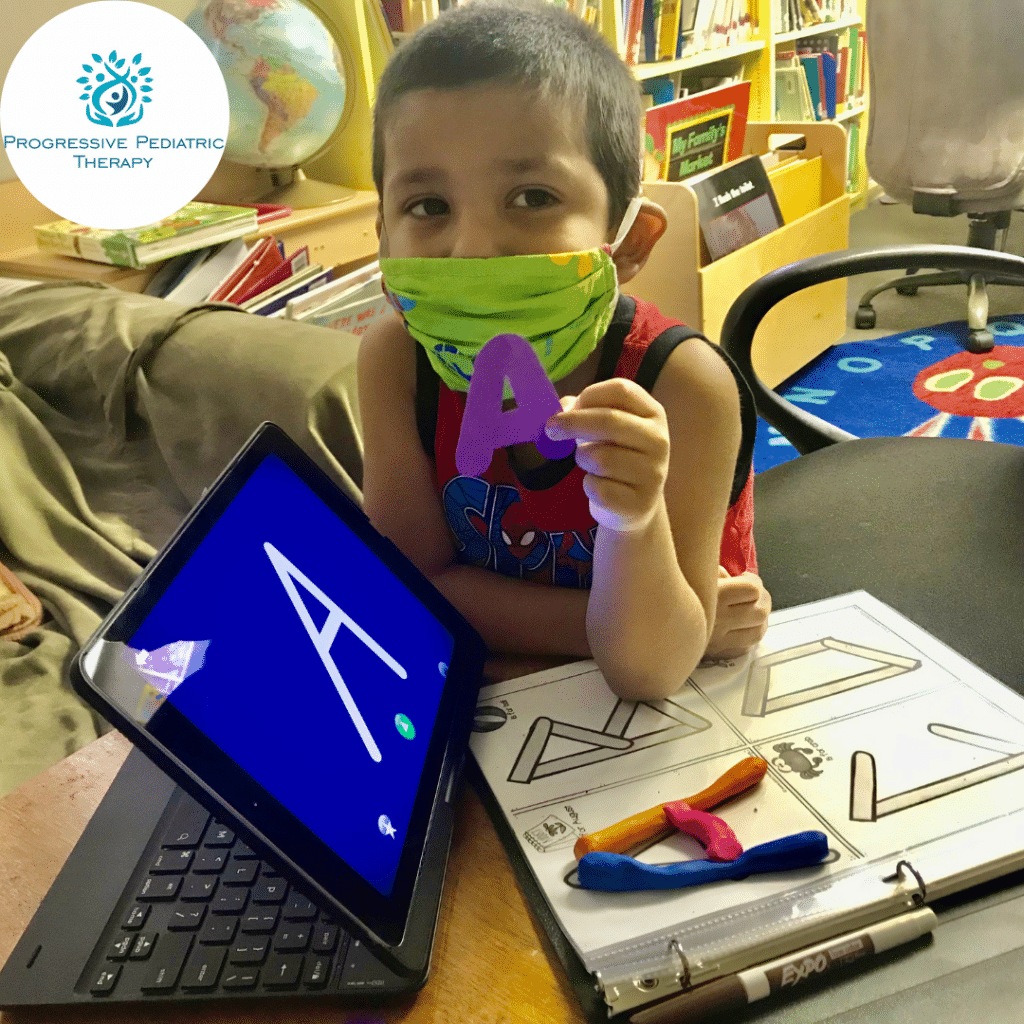
A young boy wearing a mask is holding a letter a in front of a laptop.
Jose learns the letter “A” using three different sensory approaches: tracing on a tablet, forming the “A” using playdough, and exploring a cut out letter “A”.

How can I incorporate multi-sensory learning into my child’s virtual school day?

Try these activities using common, everyday materials found in the home:

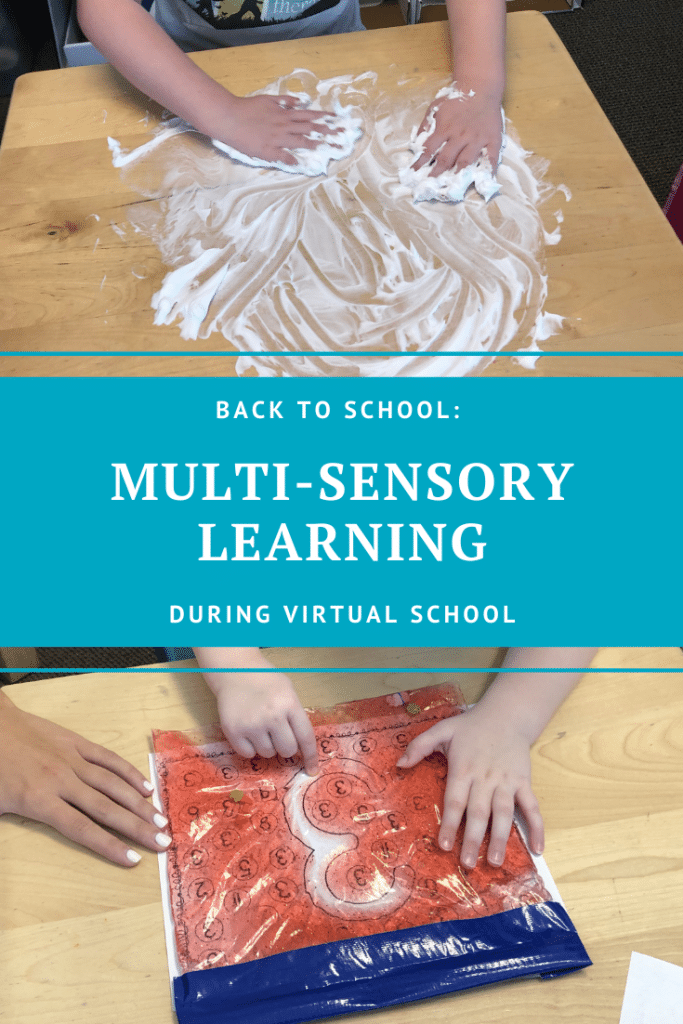
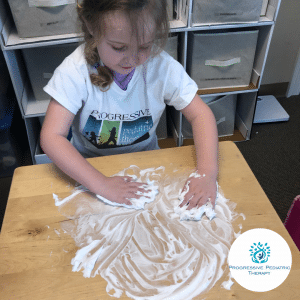
  • Shaving Cream, Sand, or Salt Writing- Place shaving cream, sand, or salt on a cookie sheet and have your child practice their letters, vocabulary, or spelling words! 
A little girl wearing a progressive shirt is playing with shaving cream
Sierra practices letter formation by drawing in shaving cream.
  • Craft Sticks- Have your child build shapes, letters, and pictures of whatever they are learning with craft sticks! 
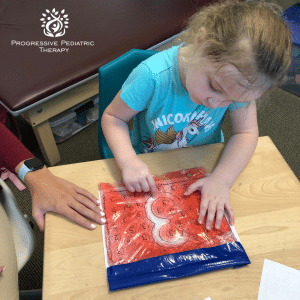
  • Ziplock Sensory Writing Bags- Fill a freezer bag with hair gel and add food coloring. Use a q-tip or finger for writing. 
A little girl is playing with a bag that says progressive pediatric therapy
Sierra traces number “3” using a sensory gel bag over an outline.
  • Scented Paint- Paint letters or vocabulary words. Have your child sprinkle something smelly on top! Cinnamon and garlic powder work great! 
  • Scented Playdough- Make letters and words out of playdough! Add some peppermint oil to the playdough to add in scent. 
  • Secret Back Words-Draw words or letters on your child’s back and they have to guess what you are writing! Have them draw on your back and switch roles! 
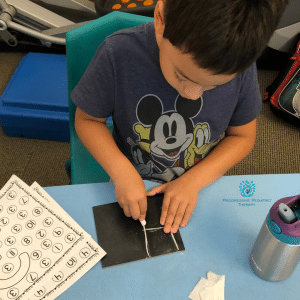
A young boy wearing a mickey mouse shirt sits at a table
Christian practices forming letter “H” using chalk on a mini chalkboard.

Have you tried some of these multi-sensory techniques? Do you have any other favorite ways to reinforce learning through use of multi-sensory instruction and play? Share with us in the comments!

The post Back to School: Multi-Sensory Learning appeared first on PPT4Kids.

By Aimee Brueck July 31, 2026
Every child experiences big emotions as they grow. Meltdowns, worries, sensory sensitivities, and difficulty with transitions are all part of learning how to navigate the world. For many parents, however, it can be hard to know what’s typical and when extra support might help. At Progressive Pediatric Therapy, our Social-Emotional Wellness Visit helps families better understand their child’s emotional development and provides practical strategies to support regulation, confidence, and calmer daily routines.
July 29, 2026
Many children with ADHD and dyslexia also have overlooked vision problems that make focus and reading harder. A 2026 research review examined whether virtual reality vision therapy for ADHD and dyslexia can help. Here is what the evidence shows, written for both parents and therapists, from the team at Progressive Pedi
Autism and Motor Skills: What New Exercise Research Shows
By Aimee Brueck July 24, 2026
A 2026 meta-analysis found structured exercise produced large gains in motor skills in autistic children. Here's what it means for parents and therapists.
By Aimee Brueck July 21, 2026
New research shows AAC can help young children build sentences, not just point to single words
Person in a motorized exoskeleton using a kiosk in a hospital hallway
By Mary B. Pengelley, PT, DPT, ATP July 18, 2026
Chapter 1: Why Do Some Children Use Standers?
By Aimee Brueck July 10, 2026
For many families, mealtime can feel more stressful than enjoyable. Parents often worry when their child suddenly refuses foods they used to love or insists on eating only a small handful of familiar items. At Progressive Pediatric Therapy, we understand how confusing and frustrating picky eating can feel. Our Feeding & Mealtime Wellness Visit helps families turn mealtime struggles into calm, confident routines where children can explore food without pressure and parents can feel supported.
By Aimee Brueck July 3, 2026
In today’s tech-filled world, many parents notice the same pattern at home: when there’s a quiet moment, children often reach for a screen. While technology can be helpful in moderation, play remains one of the most important ways children grow, connect, and learn about the world. At Progressive Pediatric Therapy, our Play Development Wellness Visit helps families understand how play develops and provides simple, practical strategies to encourage creativity, independence, and connection—without the daily battles over screen time.
By Aimee Brueck June 26, 2026
For many families, learning to ride a bike is one of childhood’s biggest milestones.It represents freedom, confidence, independence, and fun.But for some children, bike riding can also feel frustrating, scary, or overwhelming. Parents often wonder:
By Aimee Brueck June 24, 2026
In today’s digital world, children are spending more time typing, tapping, and swiping, and less time writing by hand. Many parents notice the effects quickly.
By Aimee Brueck June 19, 2026
When parents think about kindergarten or preschool readiness, most think about academics first: