A plain-language look at a 2025 study in Gait & Posture that took 47 children already referred for orthopedic treatment of idiopathic toe walking and added two objective tests: three-dimensional gait analysis and pedography. The result: about one in three children were moved off the orthopedic treatment path and onto conservative care. Written for parents weighing treatment options and for therapists and physicians deciding how to assess toe walking. We explain what the study examined, what it found, what it cannot yet tell us, and why it supports a careful look before any invasive step.
Why This Topic Matters
Idiopathic toe walking is the label given when a child keeps walking on their toes past the toddler years and no medical cause can be found: no cerebral palsy, no muscular dystrophy, no neurological finding on exam. Because "idiopathic" means "no identified cause," the diagnosis is made by ruling other things out. That leaves families and clinicians with a hard question: how severe is it, really, and how aggressively should it be treated?
In most clinics, that judgment rests on a clinical examination. A physician or therapist watches the child walk and measures how far the ankle can bend upward (dorsiflexion). Limited ankle motion is usually read as tightness in the calf muscle and Achilles tendon, and significant tightness can lead to a recommendation for orthopedic treatment, which for toe walking can include procedures such as surgery to lengthen the calf muscle or Achilles tendon. The trouble is that a child walking down a hallway for a few seconds is a small sample, and ankle tightness is only one possible piece of the picture. A 2025 study set out to test whether objective gait measurements would change those treatment decisions. They did, for nearly a third of the children.
What This Means for You as a Parent
"Idiopathic toe walking" just means doctors can't find a medical reason your child walks on their toes. To decide how serious it is, they usually watch your child walk and check how far the ankle bends. If the ankle is tight, a bigger treatment like surgery may come up. This study asked a simple question: if we measure your child's walking with better tools, do we still make the same choice?
What the Study Examined
The study, led by Tina Udemark Pasgaard and colleagues at a Danish orthopedic research group and published in Gait & Posture in 2025, included 47 children who had been diagnosed with idiopathic toe walking and referred for orthopedic treatment based on a standard clinical examination. Each child then completed a single session of testing with two tools:
- Three-dimensional gait analysis (3DGA):
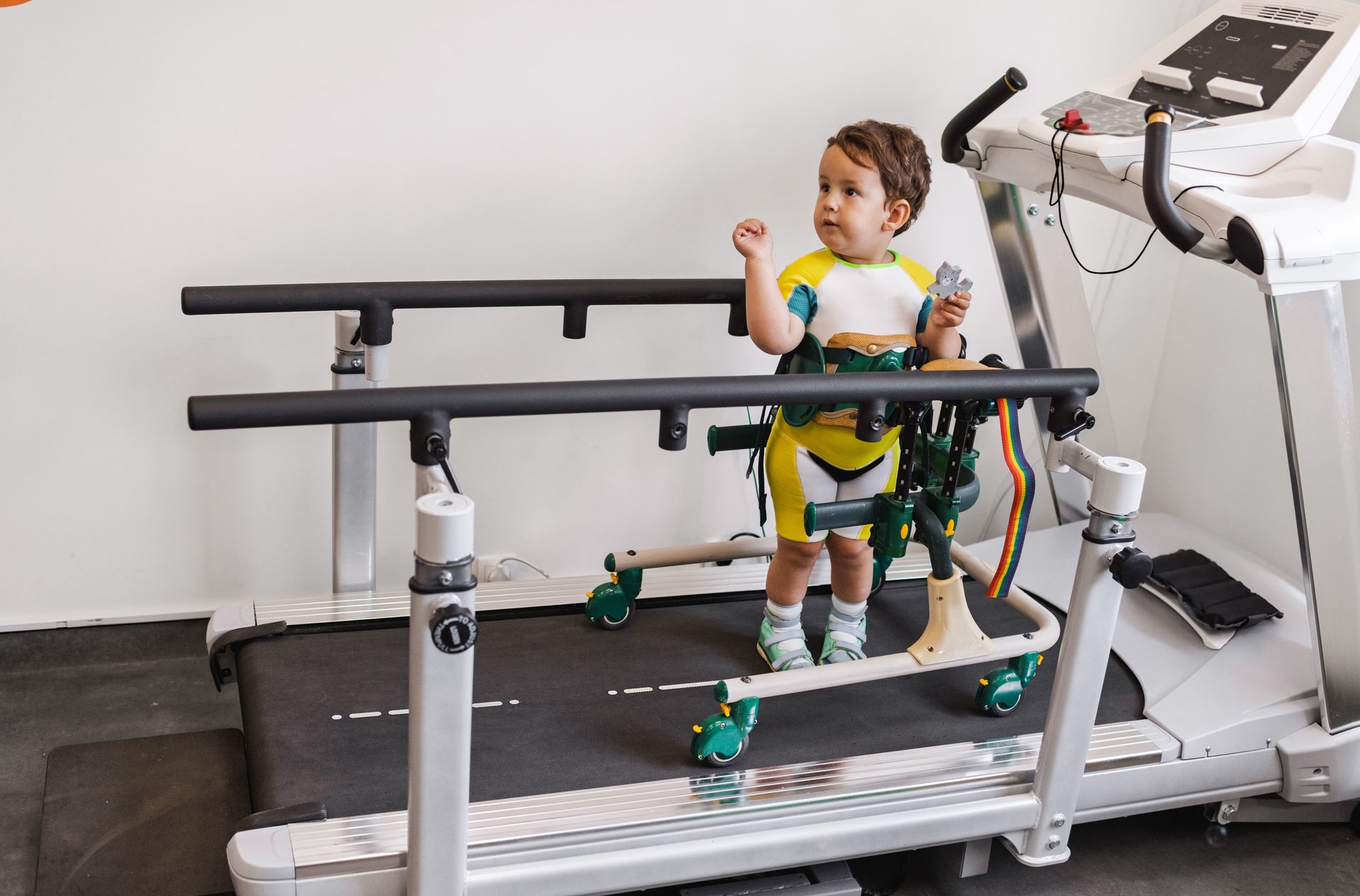
cameras and markers track how the ankle and knee move through each step, and force measurements show how much effort the joints produce. These are called kinematics (movement) and kinetics (forces).
- Pedography:
a pressure-sensing surface records how the foot contacts the ground, including how long the heel actually touches down with each step.
Using ankle angles and forces, the researchers sorted each child into one of two groups with a predefined severity classification: no-to-mild idiopathic toe walking, or moderate-to-severe. They then compared those objective results against the treatment plan that had been set from the clinical exam alone.
For therapists:
this is a cross-sectional design. Every child was measured once, at a single point in time, and the question was whether objective data would change the treatment decision, not whether the changed decision produced better outcomes later. The team used statistical parametric mapping (SPM) to compare gait curves across the whole gait cycle rather than at a few selected points, which is a more thorough way of detecting where two groups differ.
What This Means for You as a Parent
All 47 kids in this study had already been told they might need a bigger treatment. Then each child walked in a special lab. Cameras tracked every step. A pressure mat showed how long the heel touched the ground. The lab sorted each child as "mild" or "more serious." Then the team checked: does the lab agree with the first plan?
What the Researchers Found
- Severity by 3D gait analysis:
How the 47 children sorted once objective gait data was added. 15 no-to-mild, 32 moderate-to-severe.
- Treatment decisions:
Children moved from planned orthopedic intervention to conservative management. 15 of 47 (about 1 in 3).
- Gait pattern differences:
Ankle movement and ankle forces compared between severity groups. Significant differences between groups.
- Pedography:
How well heel contact data separated milder from more severe toe walking. Good accuracy (AUC 0.80).
Once three-dimensional gait analysis was added, 15 of the 47 children, all of whom had been referred for orthopedic treatment on the strength of their clinical exam, were classified as having only no-to-mild idiopathic toe walking. Their treatment plans changed accordingly: all 15 were shifted from planned orthopedic intervention to conservative management. The remaining 32 children were confirmed as moderate-to-severe.
The gait data also showed that the two groups really did walk differently. Ankle movement and ankle forces differed significantly between the milder and more severe groups. Pedography on its own performed well too: heel contact data distinguished milder from more severe toe walking with an area under the curve (AUC) of 0.80. On that scale, 0.5 is no better than a coin flip and 1.0 is perfect, so 0.80 is generally considered good discrimination for a relatively simple test.
For therapists:
the authors conclude that factors other than tightness of the gastrocnemius-soleus muscle-tendon unit should be considered when planning treatment. Put plainly, limited dorsiflexion on exam did not reliably predict how a child actually walked, and treatment plans built mainly on that measure risked overtreating a meaningful share of children.
What This Means for You as a Parent
About 1 in 3 kids turned out to have mild toe walking once the lab measured it. Those kids did not need the bigger treatment after all. They were moved to gentler care instead, like therapy, stretching, and braces. The heel pressure test worked pretty well by itself, too. The big lesson: a tight ankle on a quick check does not tell the whole story.
Why a Quick Clinical Exam Can Miss the Picture
A clinical exam is a snapshot. Many children who toe walk can walk heel-toe when they know they are being watched, and walk on their toes the rest of the day. Others look tight on a passive range-of-motion check but get their heels down more often than expected during real walking. An ankle measurement taken with the child lying still also says nothing about why the child is choosing to stay on their toes.
That last point connects to earlier research we have covered. A 2026 study found that children with autism or sensory processing disorder were far more likely to return to toe walking after surgery than children with no identified cause (read Toe Walking and Sensory Processing: Why the Cause Changes the Outcome). The Pasgaard study looked only at idiopathic toe walking, so it does not speak to sensory-driven toe walking directly. But the two studies point the same way: ankle tightness is not the whole story, and the more carefully a team looks before choosing a treatment, the better the chance of choosing the right one.
What This Means for You as a Parent
Some kids walk flat when someone is watching, then go back on their toes later. Some kids have a tight ankle but still walk better than it looks. A short check at the doctor's office can miss both. That's why a careful look, over time and in real life, matters before any big decision.
What This Means for Parents
- If your child has been recommended for surgery or another orthopedic procedure for toe walking based mainly on an ankle tightness check, it is reasonable to ask whether more objective gait information, such as a gait lab assessment, could help confirm the decision.
- About a third of the children in this study turned out to have milder toe walking than their exam suggested. A recommendation for invasive treatment is worth a careful second look, not automatic acceptance.
- Conservative care is a real treatment, not a waiting room. Physical therapy
for toe walking includes stretching, strengthening, gait training, and balance work, often combined with orthotics
or serial bracing.
- Ask what is driving the toe walking, not only how tight the ankle is. Sensory, balance, and habit factors can all play a role, and occupational therapy
can help with the sensory side.
- This study does not say surgery is never needed. Most children in it (32 of 47) were confirmed as moderate-to-severe. The point is to match the treatment to the child.
What This Means for Therapists and Clinicians
For orthopedic teams, the finding is a direct argument for objective assessment before invasive treatment of idiopathic toe walking. Where 3DGA is available, it changed the plan for roughly a third of referred children in this cohort. Where it is not, pedography's AUC of 0.80 suggests that simpler heel contact measurement may carry useful information, though it should not be treated as a stand-alone replacement until it is validated further.
For physical and occupational therapists, the practical lesson applies even without a motion lab. Passive dorsiflexion is one data point, not a severity score. A thorough toe walking evaluation should include observed gait across settings and over time, parent report of how often the child toe walks at home and school, balance and strength testing, and a sensory and developmental history. Therapists are often the clinicians who see a child walk most often, which puts them in a strong position to give referring physicians a fuller picture of real-world severity before an orthopedic decision is made. And for the third of children in this study who were redirected to conservative management, the quality of that conservative program is what ultimately matters.
What This Means for You as a Parent
For your child's care team, this study says: measure carefully before choosing a big treatment. Your child's therapists see them walk often, week after week. What they notice can help doctors understand how your child really walks. And if your child ends up on the gentler path, good therapy is what makes that path work.
The Limits of the Evidence
This is one cross-sectional study of 47 children, and it should be read that way. First, it measured whether objective data changed treatment decisions. It did not follow children afterward to show that the 15 children moved to conservative care did as well as, or better than, they would have with orthopedic treatment. That is the next question the field needs answered. Second, each child was tested in a single lab session. Children with toe walking can walk differently when they know they are being observed, so even a gait lab captures a sample, not a full day. Third, "orthopedic intervention" can cover more than one kind of treatment, and the abstract does not break down which procedures were originally planned. Fourth, the study included only children with idiopathic toe walking, so its findings do not directly apply to toe walking linked to autism, sensory processing differences, or neurological conditions. Finally, 3D gait analysis is not available in every community, and results from one research setting may not translate perfectly elsewhere.
What the study does establish is that a clinical exam alone, built largely around ankle tightness, overestimated severity for a substantial share of children who had already been referred for orthopedic treatment. That is a meaningful finding for any family weighing an invasive option.
What This Means for You as a Parent
This was one study with 47 kids. It showed that better testing changed the plan for about 1 in 3 of them. It did not check how those kids were doing months later. It also only looked at kids with no known cause for toe walking. So it is a strong reason to ask good questions, but not the final word.
Signs Your Child's Toe Walking Deserves a Closer Look
- Toe walking that continues past age three, or that starts in a child who used to walk flat-footed
- Toe walking on one side only
- Trouble getting heels down when standing still, squatting, or walking barefoot
- Frequent tripping, falling, or difficulty keeping up with peers
- Complaints of foot, ankle, or leg pain, or shoes wearing out unevenly at the front
- Toe walking that gets worse with excitement, stress, or busy environments
- A recommendation for surgery or casting that was based on a single short exam
Frequently Asked Questions
What is idiopathic toe walking?
Idiopathic toe walking is persistent walking on the toes or balls of the feet, past the age when most children develop a heel-toe pattern, with no identifiable medical cause. It is diagnosed by ruling out conditions such as cerebral palsy, muscular dystrophy, and other neurological causes.
Does idiopathic toe walking need surgery?
Not usually as a first step. Conservative care such as physical therapy, stretching, orthotics, and bracing is the typical starting point. In this 2025 study, adding objective gait analysis moved 15 of 47 children who had been referred for orthopedic treatment onto conservative management instead.
What is gait analysis for toe walking?
Three-dimensional gait analysis uses cameras, body markers, and force measurements to record exactly how a child's ankles and knees move and work during walking. Pedography uses a pressure-sensing surface to record how the foot meets the ground, including how long the heel stays down.
Can a physical therapist tell how severe my child's toe walking is?
A pediatric physical therapist can assess range of motion, strength, balance, and walking patterns, and can observe your child's gait over many sessions. That ongoing picture is valuable. This study suggests that a single quick ankle check is not enough on its own to judge severity.
Should I ask for a gait analysis before my child has toe walking surgery?
It is a reasonable question to raise with your child's orthopedic surgeon, especially if the recommendation was based mainly on ankle tightness. Availability varies by area, and your surgeon can explain whether it would change the plan for your child.
Where Families Can Turn
Progressive Pediatric Therapy helps children with toe walking across Palm Beach County, Lake Worth, Boca Raton, and Port St. Lucie with physical and occupational therapists who look at the whole child: strength, range of motion, balance, gait, and the sensory piece. Our conservative care options include gait training, stretching and strengthening programs, orthotics evaluations and fittings, serial bracing, and therapeutic vibration, the same kind of care that this research found was the right fit for about a third of children who had been headed toward orthopedic treatment. If your child walks on their toes, or you have been told surgery may be the next step and want a careful second look at how your child moves, our team is glad to help. Learn more about our toe walking therapy
or contact us to schedule an evaluation.
Sources & Attribution
Primary study, retrieved from PubMed: Pasgaard TU, Pedersen MB, Rahlf SH, Erichsen JL, Faergemann C, Viberg B, Holsgaard-Larsen A. Clinical impact of gait analysis and pedography in treatment decision-making for idiopathic toe walking: A cross-sectional study. Gait Posture. 2025 (Epub September 13, 2025);109979. PMID: 40967936. https://doi.org/10.1016/j.gaitpost.2025.109979