School Time Readiness

Progressive Pediatric Therapy • August 12, 2022

Written By: Hannah Mallen, M.S., CCC-SLP

As school gets ready to start in the fall, our children will be spending time in school with teachers and new classmates. For many parents, there is a struggle with their children communicating about events happening at school. How was your day? What did you do? These are some of the basic questions many parents ask their children, but often these questions are difficult for our clients with language-based difficulties.

How can I help?

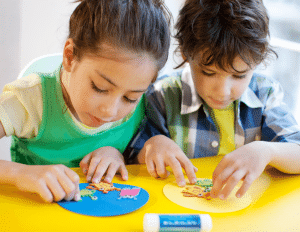
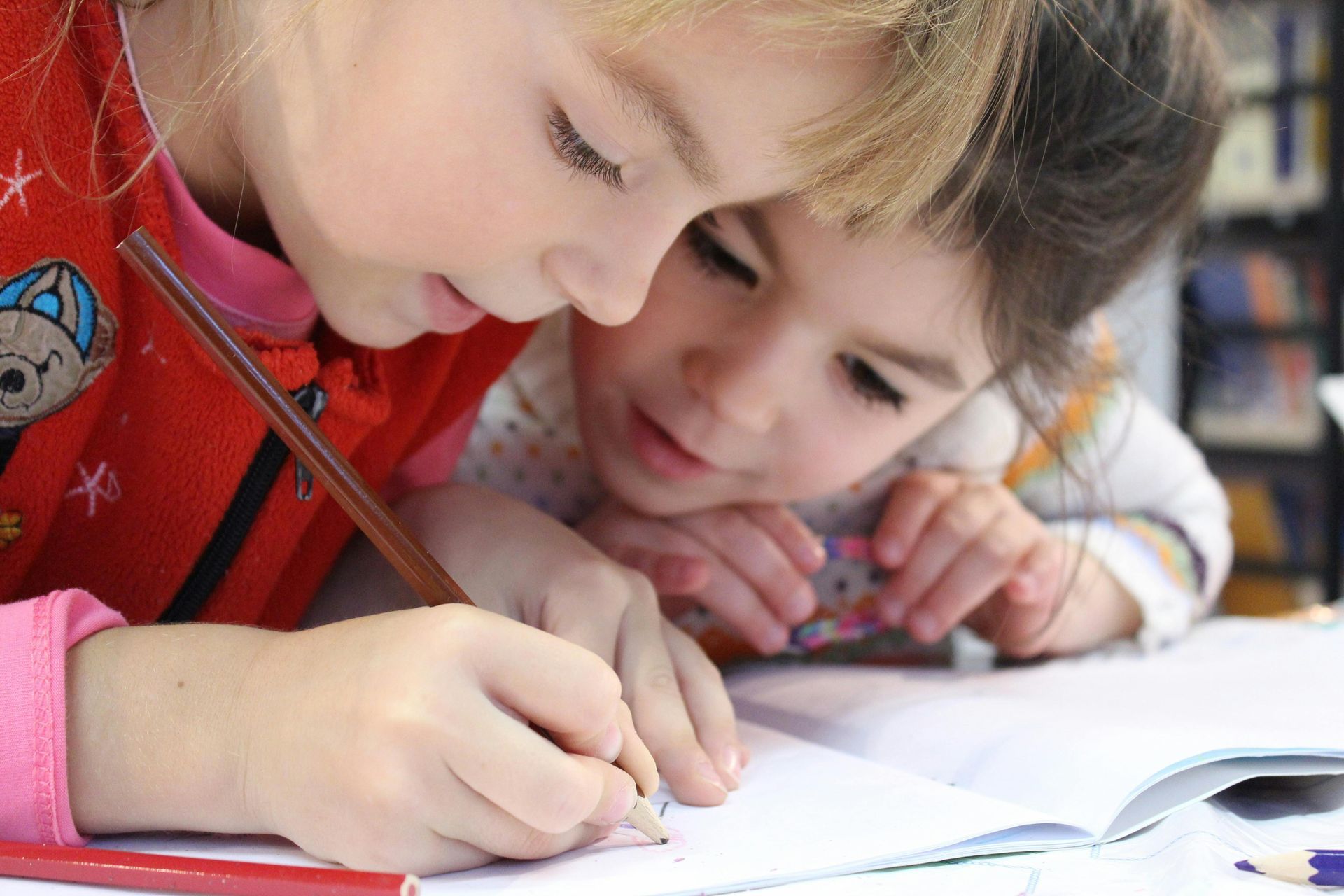
A boy and a girl are sitting at a table making crafts.
  • Have teachers send home a daily note with 1-2 details from the day.
    • For example, they made pumpkin crafts today, or went to music class and enjoyed the drums. These details will help parents support their children in answering appropriately.
  • Give your children choices (e.g., Did you have music or art today?)
  • Verbal cues (e.g., Your teacher said you made a craft that is orange and grows outside)
  • Models (e.g., You made pumpkins in school!).

A woman and a little girl are sitting on a bed.

Why does this matter?

In this way, children feel successful in communicating about past events or more complex ideas that are not visible in the here and now. You can also work on taking pictures during fun activities to share with teachers or family members later, which can help with story retell.

Enjoy the new school year!

If you have concerns regarding your child’s readiness for the upcoming school year, you can request a  FREE Screening  or learn more about our services on our website  www.ppt4kids.com ! 

We offer comprehensive evaluations and free screenings with locations in Boca Raton, Lake Worth, West Palm Beach, Port St. Lucie, as well as teletherapy visits.

The post School Time Readiness appeared first on PPT4Kids.

By Aimee Brueck August 21, 2026
In a world filled with screens, typing, and digital learning, handwriting — especially cursive — is becoming less common in many classrooms. Yet handwriting remains one of the most powerful tools for learning. Writing by hand connects movement, memory, and meaning in ways that typing simply cannot. At Progressive Pediatric Therapy, our Cursive Handwriting Program helps children strengthen the physical and cognitive skills behind writing while rediscovering the joy of putting pen to paper.
By Aimee Brueck August 18, 2026
In today’s technology-driven world, many children are moving less than previous generations. While screens and busy schedules can make life easier in some ways, they also mean fewer opportunities for children to build the movement skills their bodies need. Parents often notice when movement feels harder for their child — whether it’s riding a bike, keeping up with peers, or participating in active play. At Progressive Pediatric Therapy, our Movement Wellness Visit helps families understand how movement supports development and provides simple, realistic ways to build strength, coordination, and confidence through everyday play.
By Aimee Brueck August 14, 2026
Every child experiences the world in their own unique way. Some children love to climb, jump, and explore everything around them, while others prefer quieter activities or take longer to warm up to new types of play. For parents, it can sometimes be difficult to know whether these differences are simply personality or signs that a child may need extra support. At Progressive Pediatric Therapy, our Sensorimotor Wellness Visit helps families better understand how their child moves, explores, and processes the world — while providing practical strategies to support healthy development through play and everyday routines.
By Aimee Brueck August 4, 2026
Many families today raise children in homes where more than one language is spoken. While this is a wonderful gift, it can also bring questions and concerns about speech and language development. Parents often wonder if learning multiple languages will confuse their child or delay speech. At Progressive Pediatric Therapy, our Bilingual Language Wellness Visit helps families understand what typical bilingual development looks like and provides practical strategies to nurture every language their child speaks with confidence.
By Aimee Brueck July 31, 2026
Every child experiences big emotions as they grow. Meltdowns, worries, sensory sensitivities, and difficulty with transitions are all part of learning how to navigate the world. For many parents, however, it can be hard to know what’s typical and when extra support might help. At Progressive Pediatric Therapy, our Social-Emotional Wellness Visit helps families better understand their child’s emotional development and provides practical strategies to support regulation, confidence, and calmer daily routines.
July 29, 2026
Many children with ADHD and dyslexia also have overlooked vision problems that make focus and reading harder. A 2026 research review examined whether virtual reality vision therapy for ADHD and dyslexia can help. Here is what the evidence shows, written for both parents and therapists, from the team at Progressive Pedi
Autism and Motor Skills: What New Exercise Research Shows
By Aimee Brueck July 24, 2026
A 2026 meta-analysis found structured exercise produced large gains in motor skills in autistic children. Here's what it means for parents and therapists.
By Aimee Brueck July 21, 2026
New research shows AAC can help young children build sentences, not just point to single words
Person in a motorized exoskeleton using a kiosk in a hospital hallway
By Mary B. Pengelley, PT, DPT, ATP July 18, 2026
Chapter 1: Why Do Some Children Use Standers?
By Aimee Brueck July 10, 2026
For many families, mealtime can feel more stressful than enjoyable. Parents often worry when their child suddenly refuses foods they used to love or insists on eating only a small handful of familiar items. At Progressive Pediatric Therapy, we understand how confusing and frustrating picky eating can feel. Our Feeding & Mealtime Wellness Visit helps families turn mealtime struggles into calm, confident routines where children can explore food without pressure and parents can feel supported.