Transition Troubleshooting

Progressive Pediatric Therapy • December 3, 2020

Written by: Shira  Danino, M.A., CCC-SLP

A little girl with curly hair is standing with her arms crossed in front of a sign that says `` transition troubleshooting ''.
How can I help my child adapt to changes in our routine during the holidays?

Home for the holidays with a child who has trouble transitioning? Transitions can be real triggers for many children. Ending a video game or a sport can be a drag when your parent asks you to take a bath or throw out the garbage. However, they can be particularly difficult for kids with emotional and developmental issues. 

Holiday season means a lot of things to all of us. It can be reuniting with family, endless holiday dinners, too much dessert, holiday light festivities, cheerful music, and days off from school. Kids at home all day. Schedules and routines disrupted can mean transition trouble for your little one. If you have a child who sticks to routine and loves a good schedule, a few days at home can throw you and your family for a loop. Here are some tips to help your child with Autism, ADHD, anxiety, and sensory processing issues to swiftly adapt to a schedule change over the holiday season. 

  • Create a visual schedule for the day . Take the time to draw little pictures of mealtimes, TV time, trips, time outside, indoor play time, arts and crafts, bathtime, and bedtime. This way, your child knows she has a place to go to in order to see what’s coming next. Even better, she gets to see her plan for the day once she wakes up and knows there’s a schedule in place. 
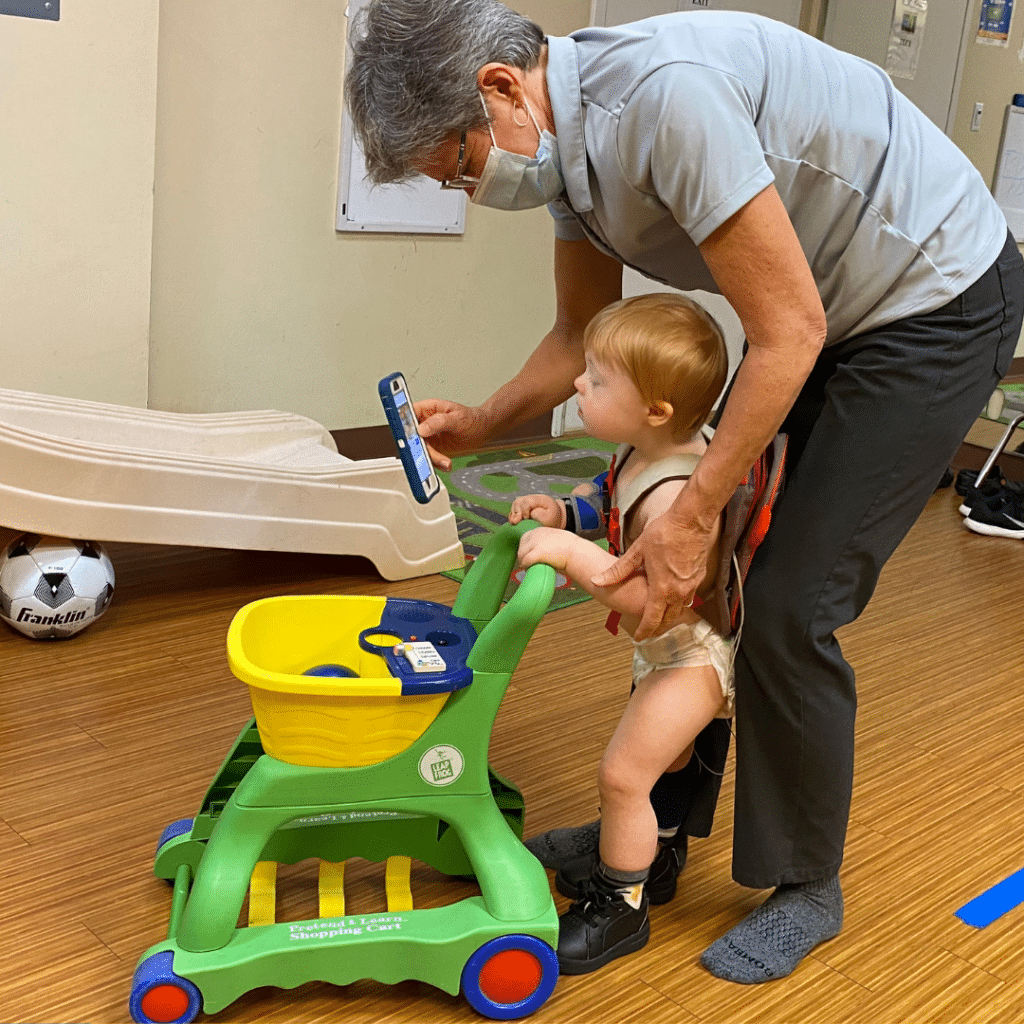
A man wearing a mask is helping a baby push a shopping cart.
Bring an item from the previous activity to the next!
  • Give a warning before asking your child to switch activities. This warning can be verbal, visual, or both. A lot of parents announce “clean up time” when it’s  time to clean up. This can be a shock  to kids and feels to come out  of nowhere. Give them a 1-2  minute warning so they can prepare themselves for a change. 
  • Use a transition item.   Allow your child to bring an item from the previous activity to the next. For example, if you’re leaving the house and your child is playing with her dolls, allow her to bring one doll into the car with her. 
  • Use a visual timer. Some kiddos are too young to understand a timer with numbers, but there are plenty of visual timers on your smartphone that can show your child how much time is left. Check out Visual Countdown Timer, Time Timer, Fun Timer for Parents, and Fun Emoji Timer in the Apple App Store. 
  • Believe in your child. Your child can do it! With your help, our little buddies can be so successful! 
Three young boys are holding up signs that say happy new year.
You can help your child adjust to the change in routine during the holidays!

Perhaps these tips might help during your holidays at home (or away at family). If you have tried something else at home that has helped, drop us a line and comment below to share your success! 

The post Transition Troubleshooting appeared first on PPT4Kids.

By Aimee Brueck August 4, 2026
Many families today raise children in homes where more than one language is spoken. While this is a wonderful gift, it can also bring questions and concerns about speech and language development. Parents often wonder if learning multiple languages will confuse their child or delay speech. At Progressive Pediatric Therapy, our Bilingual Language Wellness Visit helps families understand what typical bilingual development looks like and provides practical strategies to nurture every language their child speaks with confidence.
By Aimee Brueck July 31, 2026
Every child experiences big emotions as they grow. Meltdowns, worries, sensory sensitivities, and difficulty with transitions are all part of learning how to navigate the world. For many parents, however, it can be hard to know what’s typical and when extra support might help. At Progressive Pediatric Therapy, our Social-Emotional Wellness Visit helps families better understand their child’s emotional development and provides practical strategies to support regulation, confidence, and calmer daily routines.
July 29, 2026
Many children with ADHD and dyslexia also have overlooked vision problems that make focus and reading harder. A 2026 research review examined whether virtual reality vision therapy for ADHD and dyslexia can help. Here is what the evidence shows, written for both parents and therapists, from the team at Progressive Pedi
Autism and Motor Skills: What New Exercise Research Shows
By Aimee Brueck July 24, 2026
A 2026 meta-analysis found structured exercise produced large gains in motor skills in autistic children. Here's what it means for parents and therapists.
By Aimee Brueck July 21, 2026
New research shows AAC can help young children build sentences, not just point to single words
Person in a motorized exoskeleton using a kiosk in a hospital hallway
By Mary B. Pengelley, PT, DPT, ATP July 18, 2026
Chapter 1: Why Do Some Children Use Standers?
By Aimee Brueck July 10, 2026
For many families, mealtime can feel more stressful than enjoyable. Parents often worry when their child suddenly refuses foods they used to love or insists on eating only a small handful of familiar items. At Progressive Pediatric Therapy, we understand how confusing and frustrating picky eating can feel. Our Feeding & Mealtime Wellness Visit helps families turn mealtime struggles into calm, confident routines where children can explore food without pressure and parents can feel supported.
By Aimee Brueck July 3, 2026
In today’s tech-filled world, many parents notice the same pattern at home: when there’s a quiet moment, children often reach for a screen. While technology can be helpful in moderation, play remains one of the most important ways children grow, connect, and learn about the world. At Progressive Pediatric Therapy, our Play Development Wellness Visit helps families understand how play develops and provides simple, practical strategies to encourage creativity, independence, and connection—without the daily battles over screen time.
By Aimee Brueck June 26, 2026
For many families, learning to ride a bike is one of childhood’s biggest milestones.It represents freedom, confidence, independence, and fun.But for some children, bike riding can also feel frustrating, scary, or overwhelming. Parents often wonder:
By Aimee Brueck June 24, 2026
In today’s digital world, children are spending more time typing, tapping, and swiping, and less time writing by hand. Many parents notice the effects quickly.