Preventing Summer Slide: Keep Your Kids Engaged with Lively Letters!

Progressive Pediatric Therapy • June 7, 2024
A chalkboard with the words school 's out for summer written on it

Summer is a time for fun, relaxation, and a well-deserved break from the school routine. However, it’s also important to keep your children’s minds active to prevent the dreaded “summer slide” – the loss of academic skills over the summer months. One effective way to combat this is through engaging and fun educational activities. Welcome to our overview of Lively Letters – the dynamic program revolutionizing how kids learn to read! 📚✨

What is Summer Slide?

The summer slide refers to the decline in reading and math skills that can occur when children are out of school for extended periods. Studies show that students can lose up to two months of reading skills during the summer. But don’t worry – there are plenty of ways to keep your child’s literacy skills sharp while they enjoy their summer vacation.

An illustration of a slide that says start of summer and end of summer

Introducing Lively Letters!

Lively Letters program offers an engaging and effective approach to literacy instruction designed for children of all ages and abilities. Lively Letters uses multi-sensory techniques to teach letter sounds, phonemic awareness, and decoding skills in a fun and interactive way. 

Check out this video to see Lively Letters in action!

Why Lively Letters?

  • Multi-Sensory Learning: Lively Letters combines visual, auditory, and kinesthetic learning styles to help children understand and retain letter sounds and phonemic patterns. 
  • Engaging Characters: The program features colorful characters and lively activities that captivate young learners and make the process of learning to read enjoyable.
  • Tailored for All Levels: Whether your child is just starting to learn their letters or needs to reinforce their reading skills, Lively Letters is adaptable to various learning stages.

How Can You Use Lively Letters This Summer?

  1. Daily Practice: Set aside a few minutes each day for your child to engage with Lively Letters activities. Consistency is key in preventing summer slide.
  2. Interactive Games: Incorporate the characters and activities from Lively Letters into daily playtime. Kids learn best when they’re having fun!
  3. Family Involvement: Make it a family affair! Encourage siblings to play along and help each other with the activities.
A woman is reading a book to a young girl in a library.

Get Started Today!

We invite you to join the many families who are already benefiting from Lively Letters. Start your child on a path to reading success this summer with a program that’s as fun as it is educational. 

Preventing the summer slide doesn’t have to be a daunting task. With tools like Lively Letters, you can ensure that your child’s literacy skills remain sharp while they enjoy their summer break. Dive into the world of Lively Letters and discover how learning to read can be a magical and rewarding journey for your child.

Happy reading and have a wonderful summer!

PPT is committed to empowering children and families through specialized Physical, Occupational, Speech, and Feeding Therapy. With a compassionate team of pediatric therapists, PPT focuses on providing individualized care, enhancing development, and fostering hope and happiness in a supportive environment.

Curious if your child could benefit from our services? Contact us for an evaluation. For more parenting tips and tricks, don’t forget to subscribe to our blog and YouTube channel . Share your own experiences in the comments below, or reach out if you have any questions!

Autism and Motor Skills: What New Exercise Research Shows
By Aimee Brueck July 24, 2026
A 2026 meta-analysis found structured exercise produced large gains in motor skills in autistic children. Here's what it means for parents and therapists.
By Aimee Brueck July 21, 2026
The answer may surprise you. One of the biggest concerns parents have about Augmentative and Alternative Communication (AAC) is: "If my child starts using an AAC device, will they stop trying to talk?" It's an understandable fear. Every parent wants to hear their child's voice. Many worry that introducing a communication device means they're giving up on speech. The good news is that decades of research continue to show the opposite. AAC does not prevent children from learning to talk. In fact, many children who use AAC develop spoken language just as quickly, or even more quickly, because they are finally able to communicate successfully while speech continues to develop. Now, exciting new research published in 2026 adds another reason for families to feel hopeful. It found that preschoolers using AAC can learn much more than requesting their favorite toy or snack. With the right therapy, they can begin building sentences and expressing more complex thoughts.
Person in a motorized exoskeleton using a kiosk in a hospital hallway
By Mary B. Pengelley, PT, DPT, ATP July 18, 2026
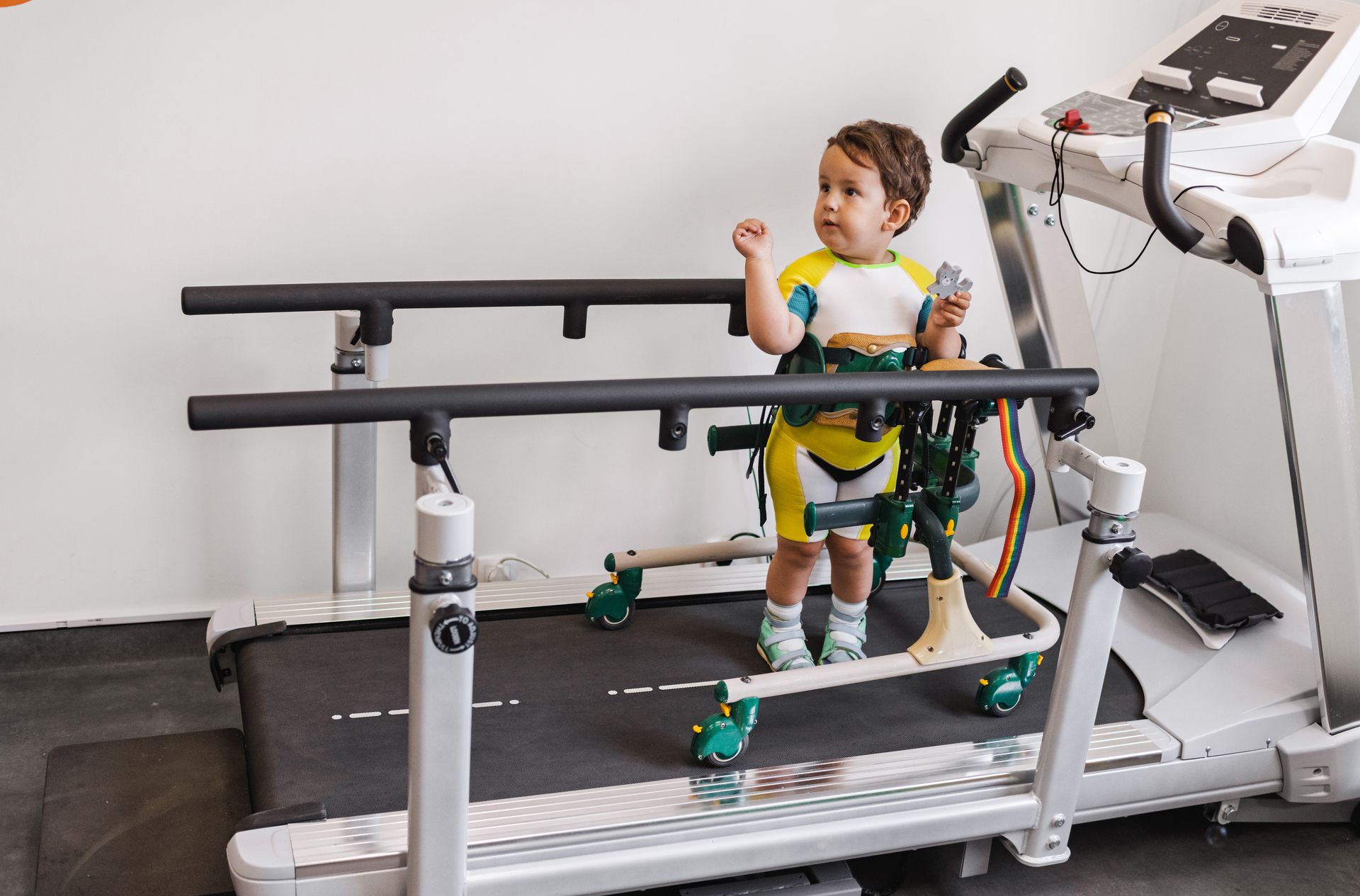
Chapter 1: Why Do Some Children Use Standers?
By Aimee Brueck July 10, 2026
For many families, mealtime can feel more stressful than enjoyable. Parents often worry when their child suddenly refuses foods they used to love or insists on eating only a small handful of familiar items. At Progressive Pediatric Therapy, we understand how confusing and frustrating picky eating can feel. Our Feeding & Mealtime Wellness Visit helps families turn mealtime struggles into calm, confident routines where children can explore food without pressure and parents can feel supported.
By Aimee Brueck July 3, 2026
In today’s tech-filled world, many parents notice the same pattern at home: when there’s a quiet moment, children often reach for a screen. While technology can be helpful in moderation, play remains one of the most important ways children grow, connect, and learn about the world. At Progressive Pediatric Therapy, our Play Development Wellness Visit helps families understand how play develops and provides simple, practical strategies to encourage creativity, independence, and connection—without the daily battles over screen time.
By Aimee Brueck June 26, 2026
For many families, learning to ride a bike is one of childhood’s biggest milestones.It represents freedom, confidence, independence, and fun.But for some children, bike riding can also feel frustrating, scary, or overwhelming. Parents often wonder:
By Aimee Brueck June 24, 2026
In today’s digital world, children are spending more time typing, tapping, and swiping, and less time writing by hand. Many parents notice the effects quickly.
By Aimee Brueck June 19, 2026
When parents think about kindergarten or preschool readiness, most think about academics first:
By Aimee Brueck June 17, 2026
Summer is a time for fun, family vacations, pool days, and a much-needed break from the school routine. But for many children, summer can also bring something educators call the “summer slide” the loss of important academic skills during the months away from school. For children who struggle with reading, language, or literacy confidence, those gaps can grow even wider over the summer months. That’s why Progressive Pediatric Therapy created our Summer Private Reading Intensive — a personalized, one-to-one literacy experience designed to help children strengthen foundational reading skills while building confidence and momentum before the new school year begins. Using the trusted Lively Letters® approach, our summer program combines evidence-based literacy instruction with engaging, multisensory learning strategies that help children stay motivated and successful.
By Aimee Brueck June 12, 2026
Important changes are coming to Florida’s Medicaid Children’s Medical Services (CMS) Health Plan beginning October 1, 2026.