Tips and Tricks for Parents: Navigating the Picky Eating Phase with Your Child
Dealing with a picky eater can be a challenge that many parents face. It’s a journey filled with tiny forks, colorful plates, and a whole lot of patience. But fear not! Embracing your child’s picky eating phase can be fun and educational for both of you. Let’s dive into some creative strategies to make mealtime less about fuss and more about exploration and enjoyment.
Embrace the Mess
It’s time to roll up those sleeves and dive in! Don’t be afraid to get messy. Children learn through their senses, and feeling their food can be an important part of this. Consider using plastic drop cloths or old newspapers for easy clean-up. Remember, a little mess today can lead to a love for a variety of foods tomorrow. This is called sensory learning.
Cooking Together
Involve your kids in meal prep. This doesn’t mean handing them a knife and letting them chop veggies. It’s about letting them experience food preparation in a safe and fun way. Think washing vegetables, stirring batter, or sprinkling cheese. It’s a great way to introduce them to new foods in a non-threatening way.
Fun Dinnerware
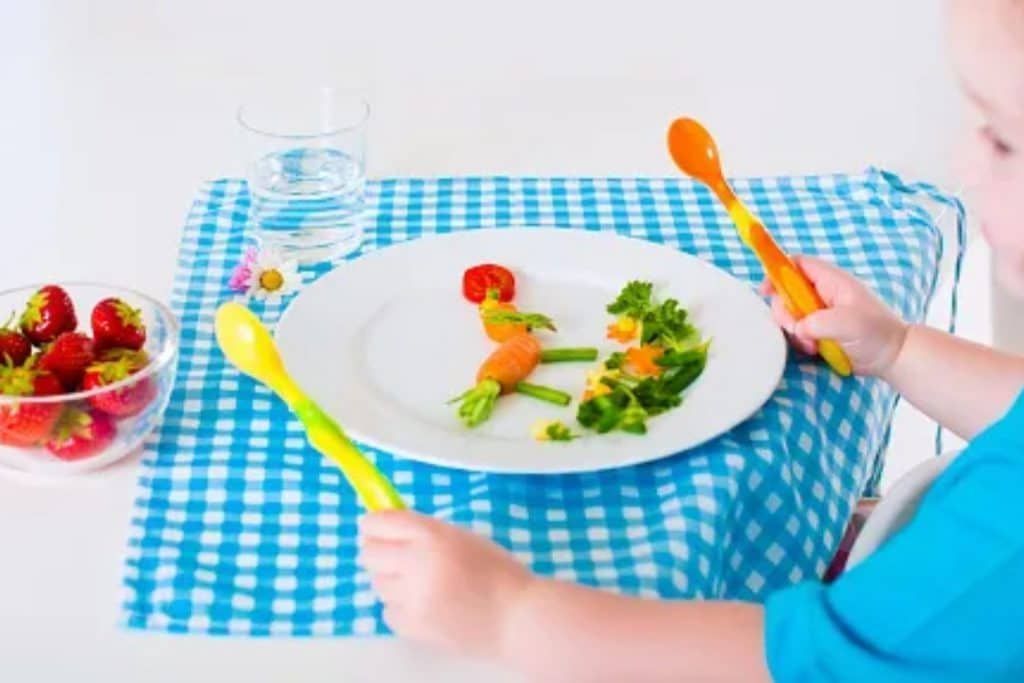
Never underestimate the power of a superhero plate or a fork that looks like a spaceship. Fun plates, utensils, and cups can turn a dreaded meal into an exciting adventure. This simple change can make unfamiliar foods seem more appealing when served on a plate they love.
Food Pairing
Pair two foods they are comfortable with alongside a new food. This approach eases them into trying something new while surrounded by the familiarity of their favorite foods. It’s like having a safety net while exploring uncharted territories. This technique can provide comfort and reduce anxiety about trying new foods.
Portion Play
Serve small portions to avoid overwhelming your child. A mountain of peas can look daunting to a little one. Start with a pea-sized portion of new foods – literally! This makes the idea of trying it far less intimidating. And keep in mind that their tiny mouths are learning how to eat, so give them smaller amounts on a spoon to allow their mouths to learn how to chew and move the food before swallowing. This is hard work!
Sensory-Based Food Play
Encourage sensory-based food play. This might seem counterintuitive, but it’s a fantastic way to get children to interact with new foods. Let them smash, squish, and even play make-believe with their food. Sensory play helps build familiarity and curiosity.
Family Mealtime Routine
Establishing a family mealtime routine can provide a sense of security and predictability. Eating together as a family, without distractions like TV, can encourage your child to try new foods as they watch others enjoying different meals. It’s also a perfect opportunity for modeling healthy eating habits.
Pair Eating with Fun Activities
Try pairing eating with something fun. Maybe it’s storytelling during dinner, a color-themed meal night, or a picnic in the living room. The key is to associate eating with positive experiences. This doesn’t mean you should bribe them with toys or dessert, but rather create a joyful atmosphere around mealtime.
Remember, every child is different, and what works for one may not work for another. The goal isn’t to force them to eat certain foods but to create a positive relationship with food. Be patient and keep experimenting with these tips and tricks. Celebrate the small victories, and most importantly, keep mealtime a stress-free zone for you and your child.
Happy feeding!
P.S. Curious if your child could benefit from Pediatric Feeding Therapy? Contact us for a Free Screening. For more parenting tips and tricks, don’t forget to subscribe to our blog. Share your own experiences in the comments below, or reach out if you have any questions!
A 2026 systematic review and meta-analysis of 22 studies finds ARFID has a distinct clinical profile from anorexia and bulimia in children and teens. Progressive Pediatric Therapy explains what it means for feeding therapy in Palm Beach County. Schedule an evaluation today.
Is your child toe walking? Learn the causes of toe walking in children, how pediatric PT and OT help, and when to seek an evaluation. Progressive Pediatric Therapy provides individualized toe walking therapy in Palm Beach County, evaluating the whole child. Schedule an evaluation in Palm Beach County today.
A 2026 study found children with autism or sensory processing disorder were far more likely to return to toe walking after surgery than idiopathic toe walkers. Progressive Pediatric Therapy explains what that means for families in Palm Beach County and why identifying the sensory piece matters before treatment.
Does treadmill training help children with cerebral palsy walk better? South Florida families trust Progressive Pediatric Therapy for expert pediatric physical therapy in South Florida. Our licensed therapists break down a 2025 randomized trial. Schedule an evaluation today.
A 2025 peer-reviewed commentary examines the evidence behind Gestalt Language Processing (GLP) and the NLA protocol. Progressive Pediatric Therapy breaks down the concerns, the common ground, and what it means for families in Palm Beach County.
Does balance training help children with developmental delays? South Florida families choose Progressive Pediatric Therapy for expert pediatric physical therapy in South Florida. Our licensed therapists explain a new 2026 meta-analysis of 22 trials. Schedule an evaluation today.
When a baby arrives earlier than expected, the first weeks and months can bring both joy and uncertainty. Families often leave the NICU or hospital with important instructions — but also many questions about their baby’s development. Parents may find themselves wondering: “Should my baby be rolling, smiling, or eating more by now?” These questions are very common for families of premature infants. Many concerns fall into a gray area between needing formal therapy and simply needing expert reassurance and guidance. At Progressive Pediatric Therapy, our Guiding Growth Program provides proactive developmental support for premature and medically complex infants — helping families understand their baby’s development while building confidence during the first year.
What does apraxia of speech look like years from now? South Florida families trust Progressive Pediatric Therapy for pediatric speech therapy in South Florida. Our licensed speech-language pathologists break down the newest 2026 research. Schedule an evaluation today.
The first year of a baby’s life is filled with rapid growth and change. From their first smiles and rolls to sitting, crawling, and early communication, each stage brings exciting milestones — and sometimes questions for parents. Many families find themselves wondering if their baby is developing as expected or if there’s something they should be doing to support the next stage. At Progressive Pediatric Therapy, our Guiding Growth Program provides expert guidance for families during the first year of life, offering milestone monitoring, practical strategies, and reassurance as babies grow and develop.
In a world filled with screens, typing, and digital learning, handwriting — especially cursive — is becoming less common in many classrooms. Yet handwriting remains one of the most powerful tools for learning. Writing by hand connects movement, memory, and meaning in ways that typing simply cannot. At Progressive Pediatric Therapy, our Cursive Handwriting Program helps children strengthen the physical and cognitive skills behind writing while rediscovering the joy of putting pen to paper.
We empower children, families, and the community to learn, grow, and celebrate every child's unique abilities.