Don’t Let School from Home be a Pain in the Neck!

Progressive Pediatric Therapy • February 2, 2021

Written by: Megan Sliski, PT, DPT

A woman is typing on a computer keyboard while sitting at a desk.

The COVID-19 pandemic began almost one year ago. Many of us have been spending increased time at home – some of us are even working at home and our children are attending school and therapies at home. 

Take a second to consider the set-up of the desk, table, chair and computer that your child is working at day to day when completing school work or therapies. Did you know that there are recommendations for the placement of these objects for proper posturing to prevent pain and discomfort?

A little girl is sitting at a desk with a laptop and a tablet.

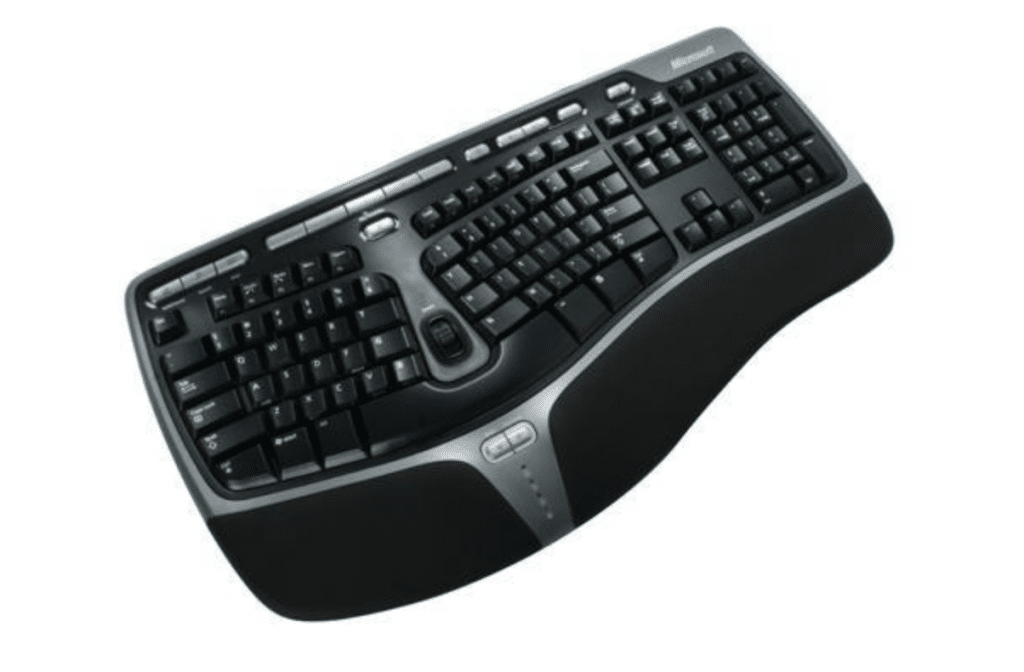
Keyboard

An ergonomic keyboard is created with an angle to allow the user’s wrist to be kept in a neutral position.

Why is this important?

When the wrist is maintained in a flexed position for an extended period of time, it can result in numbness, tingling, or pain on the palm of the hand (sometimes known as Carpal Tunnel Syndrome).

A microsoft keyboard is shown on a white background

Computer Mouse

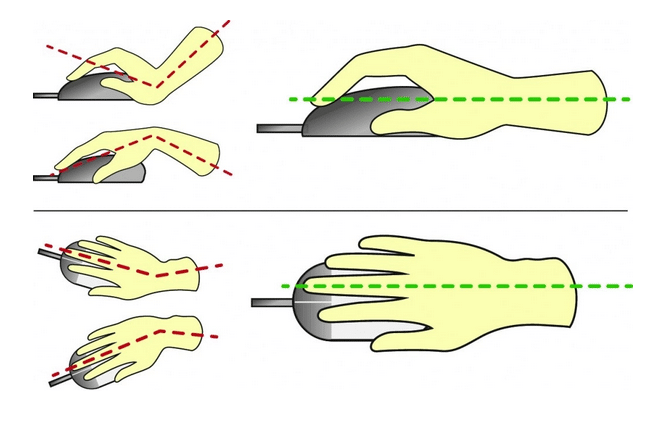
The mouse used with the computer should be located at the same level as the keyboard. Maintain the mouse directly in front of you to prevent strain on the wrist. A slanted mouse (as pictured) or an elevated mouse pad are recommended to maintain a neutral position of the wrist.

Why is this important?

When the wrist is placed in a flexed or twisted position, this increases the risk of pinching nerves within the hand. The result of prolonged twisted or flexed wrist positioning may result in similar (or other) symptoms as those listed above under indications for an ergonomic keyboard.

A drawing of a hand holding a computer mouse

Computer Chair

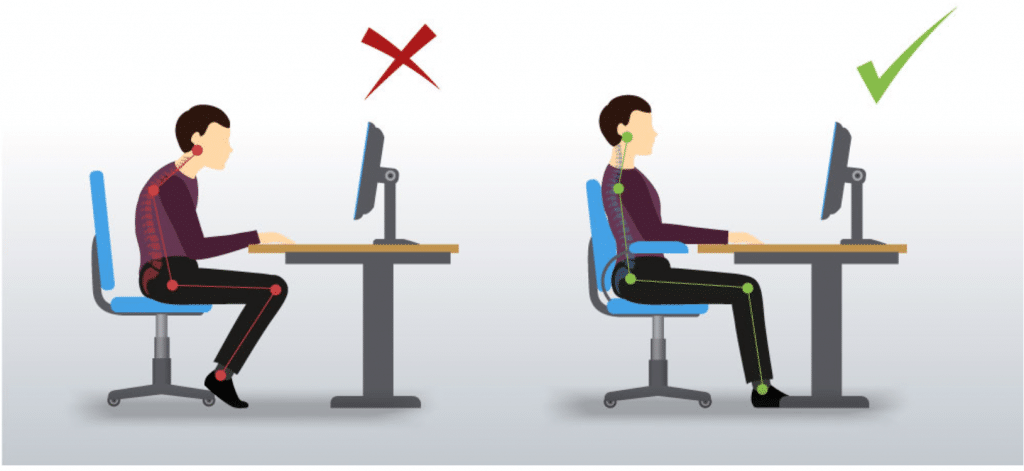
The best chair for long-term (or any kind of sitting) is a chair that molds to the curves and shapes of the human body. An ideal ergonomic computer/workstation chair will include arm rests, appropriate lumbar support, and will allow the feet to rest flat on the ground, comfortably. Ideally, the elbows should rest at a 90 degree angle on the armrests and the forearms should be fully supported. If your knees drop below your hips when sitting, a foot rest is recommended to maintain a 90 degree angle between the hips and knees. 

Why is this important?

The positioning of the chair is important to prevent proper posturing of all parts of the body, especially the spine. “Hunched” or “kyphotic” posture can result in lower, middle, and upper back pains,

For more ideas on Flexible Seating Options, Check out our other blog post Ergonomics, Flexible Seating, & Eye Health during Virtual Learning!

A man is sitting at a desk with a computer.

Computer Monitor

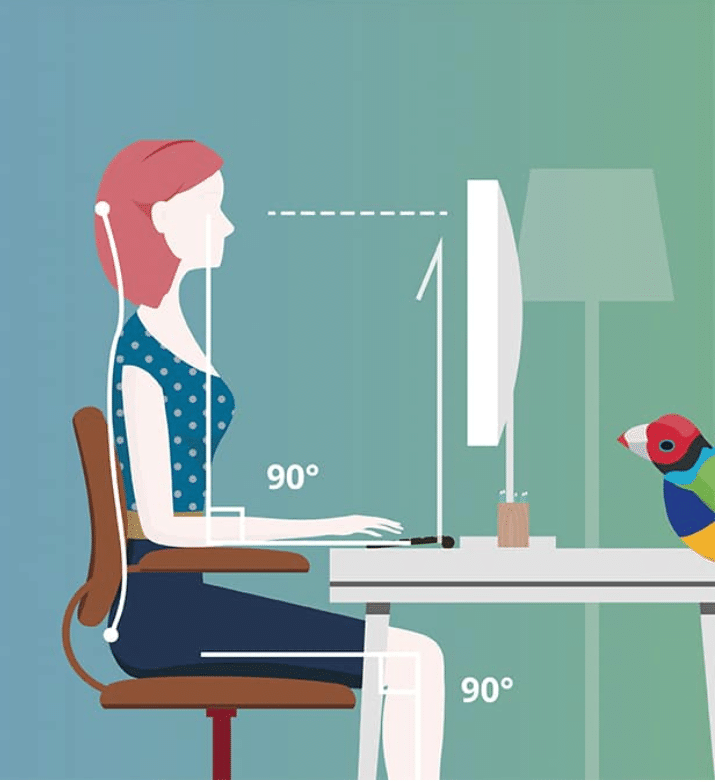
A good measure for body distance from the computer screen/monitor is one extended arm length away. The goal is to maintain the eye site line at the top of the monitor, or 1 inch lower. 

Why this is important?

Sitting too close or too far from the monitor can cause eye strain. Keeping the eye site line level with the monitor prevents excessive increases in motion of the neck. Too much flexion or extension of the neck for long periods of time can cause pinching of the nerves and result in neck/back pain, numbness, or tingling.

A woman is sitting at a desk with a computer and a parrot

Have you tried any of these ergonomic options at home? Do you have questions or comments regarding your current setup?

C o mment or share with us below!

Stay Connected with Progressive Pediatric Therapy

Get more pediatric therapy tips, developmental resources, and expert advice for parents by adding us as a preferred source on Google.

Delayed Auditory Feedback in Stuttering Therapy: What Families Should Know
By Aimee Brueck • November 24, 2026
A 2026 meta-analysis found that delayed auditory feedback (DAF) alone does not consistently reduce stuttering. Progressive Pediatric Therapy explains what this means for families and why comprehensive, individualized speech therapy in Palm Beach County remains the evidence-based approach.
Ayres Sensory Integration: What the 2026 Evidence Review Actually Found
By Aimee Brueck • November 17, 2026
A 2026 systematic review in the American Journal of Occupational Therapy graded the evidence for Ayres Sensory Integration. What strong and moderate evidence actually mean for your child's therapy.
By Aimee Brueck • November 10, 2026
A 2026 meta-analysis of 29 studies finds music education meaningfully improves children's executive function, especially working memory in preschoolers. Progressive Pediatric Therapy explains what it means for families in Palm Beach County. Schedule an evaluation today.
By Aimee Brueck • November 3, 2026
A 2026 randomized controlled trial finds virtual reality added to occupational therapy produced large gains in fine motor precision, balance, and visual perception in children with ADHD. Progressive Pediatric Therapy explains what it means for Palm Beach County families. Schedule an evaluation today.
Does Your Child's Toe Walking Really Need Surgery? What a 2025 Gait Analysis Study Found
By Aimee Brueck • October 27, 2026
A 2025 study of 47 children with idiopathic toe walking found that adding gait analysis moved about one in three from planned orthopedic treatment to conservative care. Progressive Pediatric Therapy explains what it means for families in Palm Beach County.
By Aimee Brueck • October 17, 2026
A 2026 randomized controlled trial found boys with dyspraxia (DCD) learned a throwing skill better when the target looked smaller. What the research means for parents and pediatric therapists.
By Aimee Brueck • October 16, 2026
A 2026 systematic review finds no consistent subtypes of dyspraxia (DCD). It's better understood as a spectrum of severity. Here's what that means for your child's therapy.
By Aimee Brueck • September 15, 2026
A 2026 systematic review and meta-analysis of 22 studies finds ARFID has a distinct clinical profile from anorexia and bulimia in children and teens. Progressive Pediatric Therapy explains what it means for feeding therapy in Palm Beach County. Schedule an evaluation today.
By Aimee Brueck • September 14, 2026
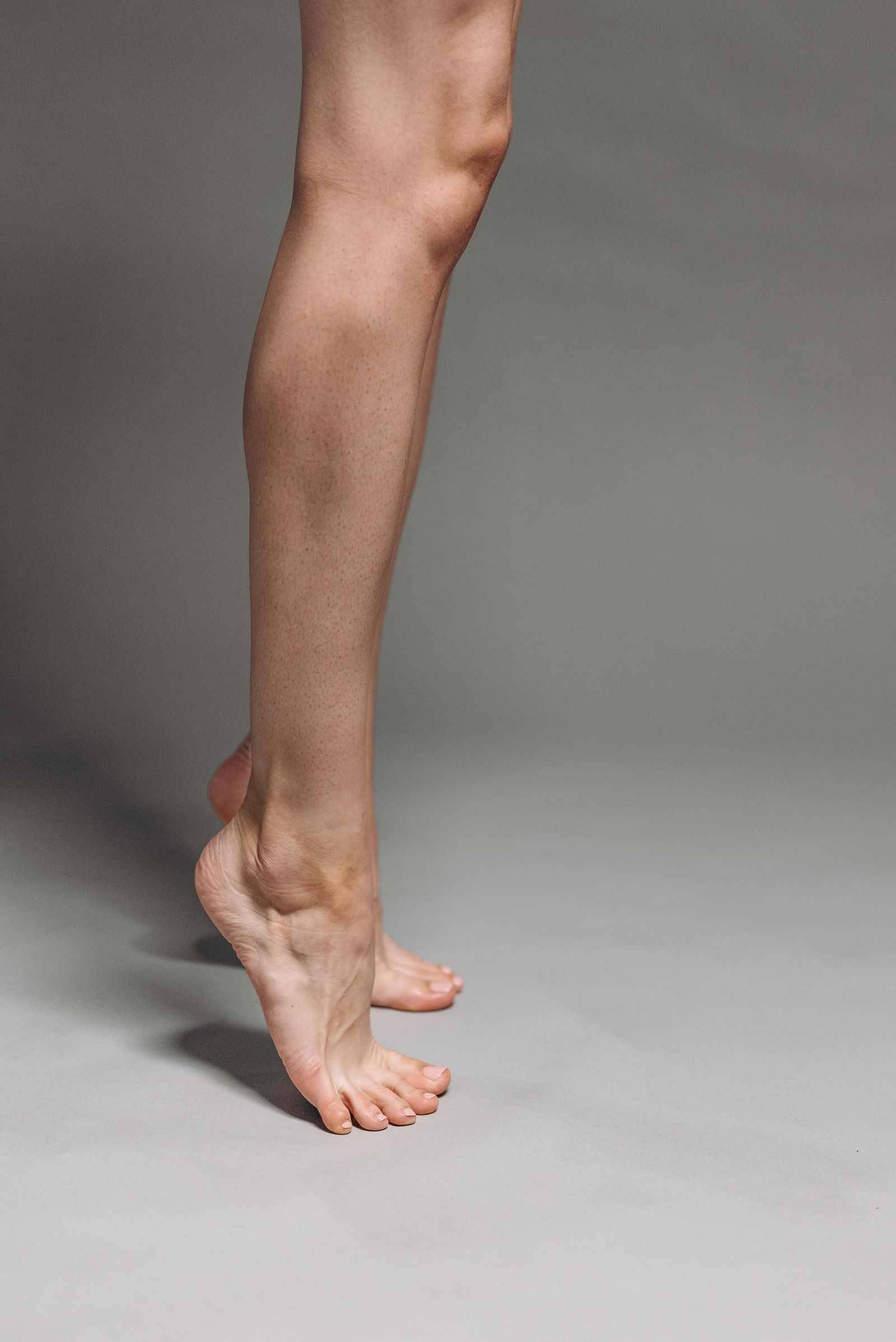
Is your child toe walking? Learn the causes of toe walking in children, how pediatric PT and OT help, and when to seek an evaluation. Progressive Pediatric Therapy provides individualized toe walking therapy in Palm Beach County, evaluating the whole child. Schedule an evaluation in Palm Beach County today.
By Aimee Brueck • September 8, 2026
A 2026 study found children with autism or sensory processing disorder were far more likely to return to toe walking after surgery than idiopathic toe walkers. Progressive Pediatric Therapy explains what that means for families in Palm Beach County and why identifying the sensory piece matters before treatment.